Stay Ahead of the Curve
Latest AI news, expert analysis, bold opinions, and key trends — delivered to your inbox.
Adobe Shares Fall as CEO Exit Stirs AI Strategy Uncertainty
5 min read Adobe Inc. saw its stock drop sharply after longtime CEO Shantanu Narayen announced his departure, raising investor concerns about the company’s AI strategy. Despite beating quarterly revenue and earnings expectations and expanding AI features across its creative and enterprise tools, uncertainty over leadership at a pivotal moment for generative AI weighed on market sentiment, highlighting the challenges legacy software firms face amid rapid AI disruption. March 13, 2026 15:46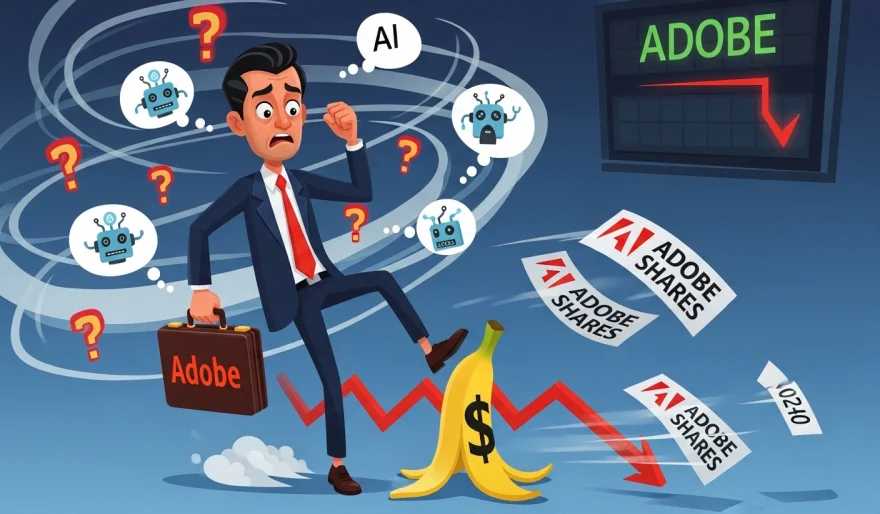
Adobe Inc. shares slid sharply this week as longtime CEO **Shantanu Narayen announced he will step down after an 18‑year tenure — a surprising leadership shift that came amid investor anxiety over the company’s AI strategy. The stock fell as much as 6–9%, even after Adobe reported better‑than‑expected quarterly revenue and earnings.
At a Critical Inflection Point
Adobe’s leadership transition comes at a moment when the software giant is trying to navigate the disruptive rise of generative AI. The company has woven AI features — from generative content tools to productivity assistants — into its flagship creative suite and enterprise products, yet critics argue that it has lagged behind nimble, AI‑native competitors in monetizing these innovations.
Under Narayen’s tenure, Adobe transformed from packaged design software into a cloud‑based creative ecosystem with recurring revenue. But investors now worry that the next chapter — one defined by AI’s accelerating pace and new challenger tools — requires a different leadership playbook.
Why This Matters
Adobe sits at the intersection of two tectonic forces reshaping tech:
-
Creative software markets are being disrupted by generative AI tools that can automate and augment tasks once done by humans.
-
Investors are demanding clarity on how AI will drive future growth, not just incremental feature boosts.
A leadership change at this juncture injects uncertainty into an already delicate narrative. It raises questions about how Adobe’s strategy will evolve — especially against rivals that are moving faster on AI workflows, user‑generated content, and cloud‑scale generative models.
Pros: What Adobe Still Has Going For It
-
Strong financial footing: Adobe reported record revenue and earnings that beat expectations, showing its core business remains resilient.
-
Deep AI integrations: AI‑influenced recurring revenue has been growing and integrated into products like Firefly and Acrobat Assistant, signaling momentum.
-
Brand and ecosystem strength: Adobe tools remain industry standards for creative professionals and enterprises alike.
Cons: What’s Worrying the Market
-
Leadership uncertainty: Without a named successor, investors fear delays in strategic decision‑making — especially regarding bold AI investments.
-
Competitive pressure: Startups and rivals are rapidly innovating in generative AI workflows that could threaten Adobe’s market share.
-
Stock performance: Adobe’s share price has been under pressure for multiple quarters, reflecting broader software valuation concerns and AI monetization skepticism.
The Road Ahead
Adobe’s next CEO — and the strategy they choose — will be critical. The company has a powerful AI‑infused portfolio, but now must prove it can monetize and differentiate those tools against agile competitors in a crowded AI landscape.
In many ways, this leadership transition is more than a personnel change; it highlights the broader industry reckoning between legacy enterprise software and rapid, AI‑driven disruption.



















 AI Agents