Stay Ahead of the Curve
Latest AI news, expert analysis, bold opinions, and key trends — delivered to your inbox.
AI Apps Are Losing Users Faster Than You Think
3 min read A new RevenueCat report shows that AI-powered apps struggle to retain subscribers, with annual cancellations happening 30% faster than non-AI apps. While roughly one in four subscription apps now uses AI, the data reveals that AI hype alone doesn’t guarantee long-term engagement. The takeaway for developers: don’t just add AI — make it core to the user experience if you want subscribers to stick around. March 11, 2026 11:27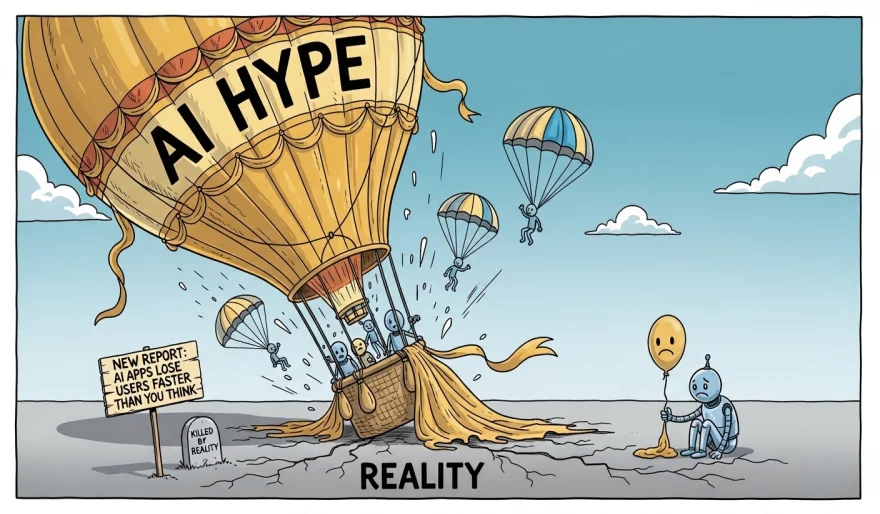
Everyone and their grandma is slapping “AI‑powered” on apps these days — but a new industry report suggests that AI alone isn’t the golden ticket to long‑term success. According to the 2026 State of Subscription Apps Report from RevenueCat — the subscription management platform used by over 75,000 developers — the AI label doesn’t automatically translate to staying power.
RevenueCat analyzed data from more than 1 billion in‑app transactions representing over $11 billion in annual revenue. What they found disrupts a common assumption: AI‑powered apps churn subscribers faster than their non‑AI counterparts. At the median, people cancel annual subscriptions for AI apps about 30 % quicker than they do for apps without AI features.
That’s a big deal because subscription retention is where the real money is in mobile and web apps. You can acquire users with flashy AI features, but if they aren’t sticking around past the first few months, long‑term revenue slows or evaporates.
Interestingly, despite the hype, most subscription apps still aren’t AI‑driven. Only 27.1 % of apps on RevenueCat’s platform call themselves AI‑powered; 72.9 % are non‑AI. But growth in the AI cohort is unmistakable — roughly one in four subscription apps now markets itself with some form of AI.
And just to be clear: “AI‑powered” here covers everything from chatbot integrations like ChatGPT and Gemini to any feature that claims the magic of machine learning or generative AI under the hood.
What this really means: AI in apps is no longer a novelty — it’s table stakes. But novelty doesn’t equal retention. Users are willing to try AI‑branded tools, but if the AI doesn’t deliver consistent, meaningful value, they’re quick to unsubscribe.
Looking ahead, the winners won’t be apps that just say they use AI — they’ll be the ones that weave it into the core experience in ways that measurably improve users’ lives, workflows, or results.
If you’re building with AI, that’s the hard lesson here: don’t chase the buzzword — chase the outcome.







 AI Agents