Stay Ahead of the Curve
Latest AI news, expert analysis, bold opinions, and key trends — delivered to your inbox.
AI Brings Pompeii Back to Life—One Face at a Time
2 min read Archaeologists are using AI to reconstruct the faces of victims from the Mount Vesuvius eruption of 79 AD in Pompeii, turning skeletal remains into lifelike human images. The approach makes history more vivid and personal, though the results are still interpretations rather than exact representations. April 27, 2026 11:38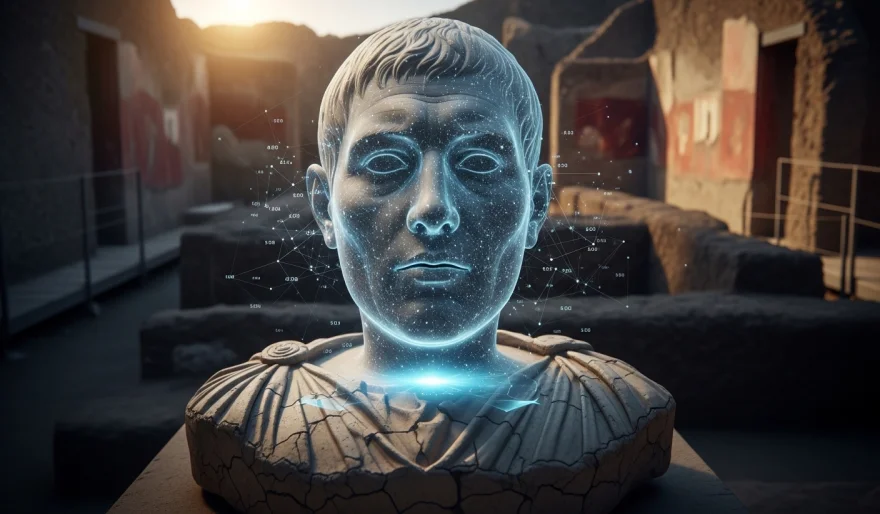
Archaeologists are turning to AI to do something extraordinary—reconstruct the faces of victims from the Mount Vesuvius eruption of 79 AD. By combining skeletal remains, forensic science, and generative AI, researchers have created lifelike images of people who died in Pompeii nearly 2,000 years ago.
The result isn’t just a scientific model—it’s a human face. Expressions, skin tone, and features brought back with surprising realism.
Why it matters:
This is where AI shifts from productivity tool to time machine.
For decades, reconstructions relied on manual artistry and educated guesses. Now, AI can analyze bone structure, historical data, and population genetics at scale—producing more refined and emotionally resonant results.
It changes how we experience history:
- Museums become more immersive
- Education becomes more personal
- Ancient events feel less distant and abstract
But there’s a line here. These faces aren’t photographs—they’re probabilistic interpretations. There’s a risk of presenting AI-generated reconstructions as absolute truth when they’re still informed estimates.
Hot take:
AI isn’t just shaping the future—it’s quietly rewriting how we see the past.



















 AI Agents