Stay Ahead of the Curve
Latest AI news, expert analysis, bold opinions, and key trends — delivered to your inbox.
AI Infrastructure Is Now a Target
5 min read Iran has threatened to strike AI data centers in the Middle East, including the $500B Stargate project backed by OpenAI, SoftBank, and Oracle. With reported attacks already hitting AWS and Oracle facilities, AI infrastructure is emerging as a geopolitical target. This marks a major shift—where the future of AI isn’t just about innovation, but security, location, and global stability. April 07, 2026 12:23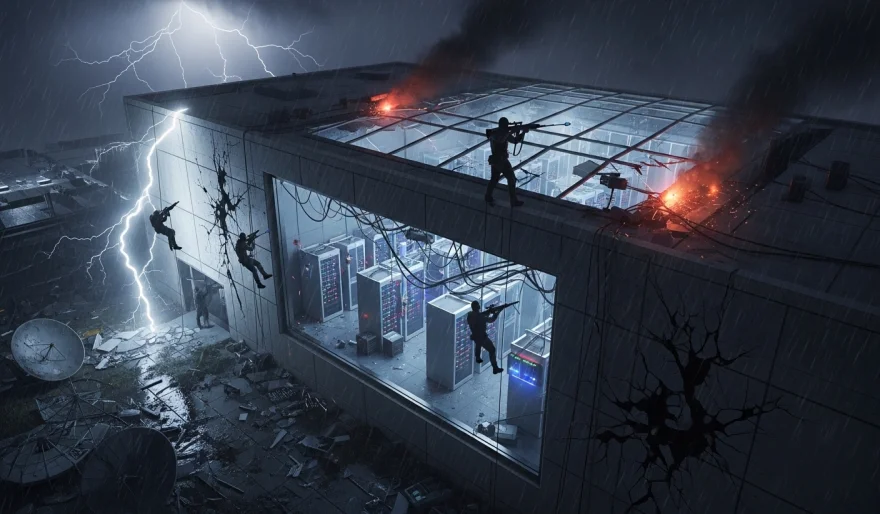
The AI race just crossed into dangerous territory.
Iran has issued direct threats against AI data centers in the Middle East—including the massive Stargate project—signaling a new phase where AI infrastructure is no longer neutral… it’s strategic.
In a widely circulated military video, Iran zoomed in on the Stargate site in the UAE with a clear message: nothing is hidden. The warning comes amid escalating tensions with the U.S., with Iran stating it could retaliate against energy and tech infrastructure across the region if strikes on its own civilian systems continue.
What’s really happening
At the center of this is Stargate—a $500B AI data center initiative backed by OpenAI, SoftBank, and Oracle.
Originally positioned as a moonshot to power the next generation of AI, it’s now being pulled into geopolitical conflict.
And this isn’t just rhetoric:
- Data centers in Bahrain and Dubai have already been hit
- Amazon Web Services and Oracle infrastructure were reportedly targeted
- Even companies like Nvidia and Apple were explicitly named in threats
This marks a shift: AI infrastructure is being treated like oil pipelines or power grids.
Why this matters
AI doesn’t exist without data centers.
Every model, every API call, every “intelligent” system runs on physical infrastructure—and that infrastructure is now exposed to geopolitical risk.
That creates three immediate consequences:
- Rising costs: Security, redundancy, and insurance for AI infrastructure will spike
- Geographic shifts: Companies may rethink where they build data centers
- Fragmentation: AI infrastructure could split along political lines
In short:
👉 The global AI stack is becoming less centralized, more defensive
The bigger picture
This comes as tensions escalate around the Strait of Hormuz—a critical global shipping route—and threats from Donald Trump to strike Iranian infrastructure.
The result is a feedback loop:
- Military escalation → infrastructure threats
- Infrastructure threats → economic + tech disruption
- Tech disruption → global ripple effects across AI, cloud, and supply chains
The subtle risk
There’s a deeper issue here most people aren’t talking about:
AI companies assumed their biggest constraints would be:
- Compute
- Data
- Talent
Now there’s a new one:
👉 Geopolitical stability
Because if data centers become active targets, scaling AI globally becomes not just expensive—but strategically fragile.
The bigger trend (hot take)
We’re entering the era of “AI geopolitics.”
Not just:
- Who builds the best models
But:
- Who can protect and control the infrastructure behind them
And that changes the game completely.



















 AI Agents