Stay Ahead of the Curve
Latest AI news, expert analysis, bold opinions, and key trends — delivered to your inbox.
Alibaba Is Preparing to Spin Out Its AI Chip Unit
4 min read Alibaba is reportedly preparing an IPO for its AI chip unit, T-Head, signaling a major push into AI hardware amid China’s tech race. The move could boost Alibaba’s control over AI compute, reduce reliance on foreign chips, and highlight the growing global trend of vertical integration — but valuation and market appetite remain uncertain. January 22, 2026 09:47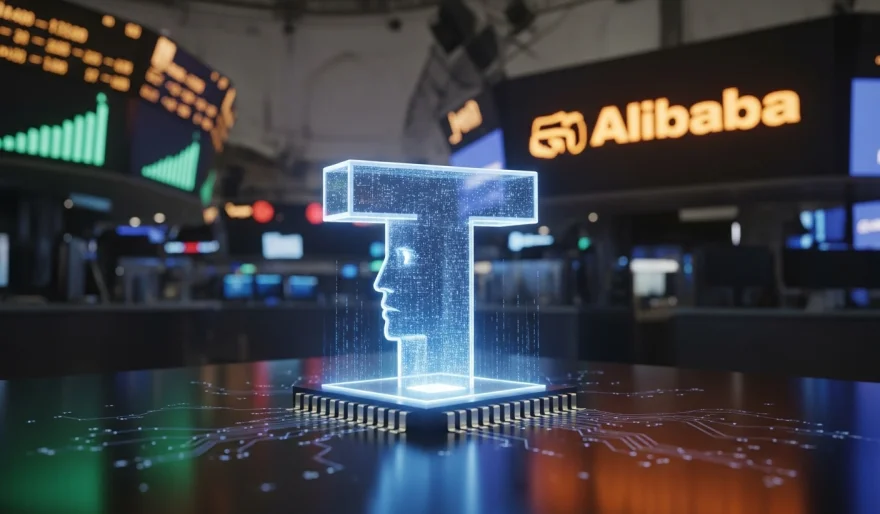
Alibaba is reportedly planning an IPO for T-Head, its in-house chipmaking subsidiary, according to Bloomberg. The move is still early-stage, but investors liked what they heard — Alibaba’s U.S.-listed shares jumped 4.6% in premarket trading after the report.
If it goes through, this wouldn’t just be another corporate restructuring. It would be a statement.
What Is T-Head?
Founded in 2018, T-Head Semiconductor is Alibaba’s wholly owned chip arm, responsible for designing:
-
Data center processors
-
AI acceleration chips
-
Internet-of-Things (IoT) chips
-
Full-stack chip architectures
In short: the hardware backbone behind Alibaba’s long-term AI and cloud strategy.
Why Alibaba Is Considering an IPO Now
This potential spinout comes at a critical moment.
Alibaba is:
-
Rebuilding momentum after years of regulatory pressure
-
Investing heavily in AI infrastructure, not just models
-
Trying to close the gap with domestic rivals in China’s AI race
Just last November, Alibaba rolled out a major upgrade to its AI chatbot, powered by its most advanced Qwen large language model, including a free consumer-facing app.
To scale AI competitively, owning compute matters — and T-Head gives Alibaba more control over cost, performance, and supply chains in a geopolitically tense chip market.
Why This Matters for the AI Industry
This isn’t just about Alibaba unlocking value.
An IPO would:
-
Signal confidence in China’s domestic chip design ecosystem
-
Reduce reliance on U.S. chipmakers amid export restrictions
-
Put AI hardware back at the center of platform strategy
-
Highlight a global trend: AI companies want vertical control — models + data + chips
We’ve already seen this play out in the U.S. with Nvidia’s dominance and hyperscalers designing custom silicon. China is now accelerating the same playbook.
The Risks
Still, plenty of unknowns remain:
-
Valuation is unclear
-
Global investors remain cautious about Chinese tech listings
-
Semiconductor development is capital-intensive and politically sensitive
And spinning out T-Head could also reduce Alibaba’s tight internal integration between cloud, AI, and hardware — a tradeoff Apple, Google, and Amazon avoid by keeping chips fully in-house.
The Bigger Picture
Alibaba isn’t just betting on better AI models — it’s betting on AI sovereignty.
If this IPO happens, it will underline a simple truth shaping the next decade of tech:
AI leadership isn’t just about intelligence anymore. It’s about who controls the silicon underneath it.



















 AI Agents