Stay Ahead of the Curve
Latest AI news, expert analysis, bold opinions, and key trends — delivered to your inbox.
Anthropic Challenges Pentagon Blacklisting, Legal Experts See Strong Case
3 min read Anthropic, the AI lab behind Claude, is suing the U.S. Department of Defense after being labeled a “supply chain risk,” which blocks it from military contracts. Legal experts say the company has a strong case, arguing the designation violates constitutional rights and may have been applied arbitrarily. Microsoft has filed a supportive brief, highlighting broader implications for AI governance, national security, and the future of private tech innovation. March 11, 2026 11:45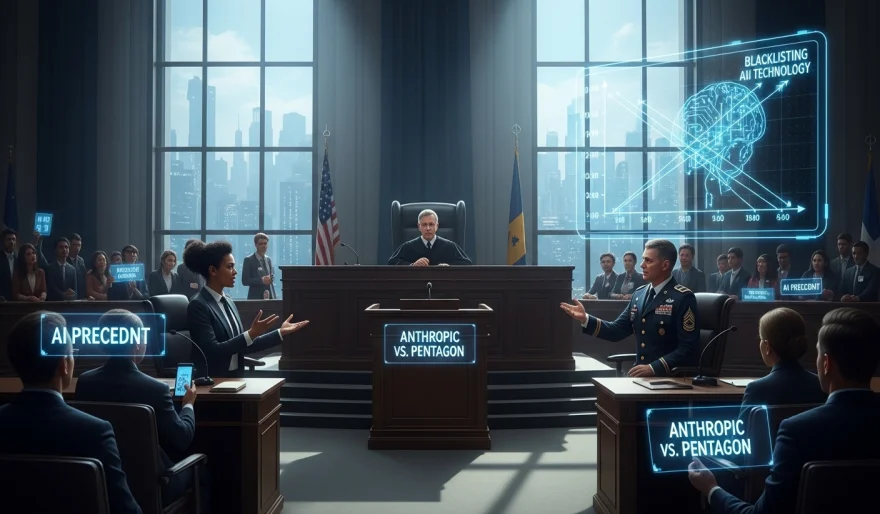
Anthropic, the AI lab behind the Claude models, is taking the U.S. Department of Defense to court — and legal experts say the company has a strong case. The Pentagon recently labeled Anthropic a “supply chain risk”, effectively barring it from military contracts. For a company that has publicly championed AI safety, the move has sparked concern across the tech and defense communities.
The lawsuit challenges the rarely used federal statute the Pentagon invoked, arguing that its application violates Anthropic’s constitutional rights, including due process and free speech. Experts note that the law has never been tested against a U.S. company in this context, making the case unprecedented.
Anthropic claims the blacklist stems from its refusal to deploy AI models for autonomous weapons or mass surveillance, positioning the dispute as more than just a contracting issue — it’s a clash over AI ethics and governance. Statements from Pentagon officials and public criticism from former President Trump could strengthen Anthropic’s argument that the government acted arbitrarily.
Adding weight to the company’s case, Microsoft filed a supportive amicus brief, urging courts to halt enforcement. The tech giant emphasized that the designation could disrupt broader AI and technology ecosystems, signaling that the outcome of this case may ripple far beyond Anthropic itself.
The stakes are high. This lawsuit isn’t just about one company’s ability to secure contracts — it could define the limits of U.S. government authority over private AI firms. More broadly, it highlights the tension between AI safety principles, commercial innovation, and national security concerns.
In short: Anthropic isn’t just fighting a contract ban. It’s challenging the boundaries of how governments can regulate AI companies, potentially shaping the future of AI governance in the U.S. and beyond.













 AI Agents