Stay Ahead of the Curve
Latest AI news, expert analysis, bold opinions, and key trends — delivered to your inbox.
Apple Seeks Injunction Against OpenAI in Trade Secrets Fight
4 min read Apple has asked a U.S. court for a preliminary injunction against OpenAI and two former Apple employees, seeking to stop the alleged use of confidential company information while its trade secrets lawsuit moves through the legal system. OpenAI has denied the allegations. August 04, 2026 12:49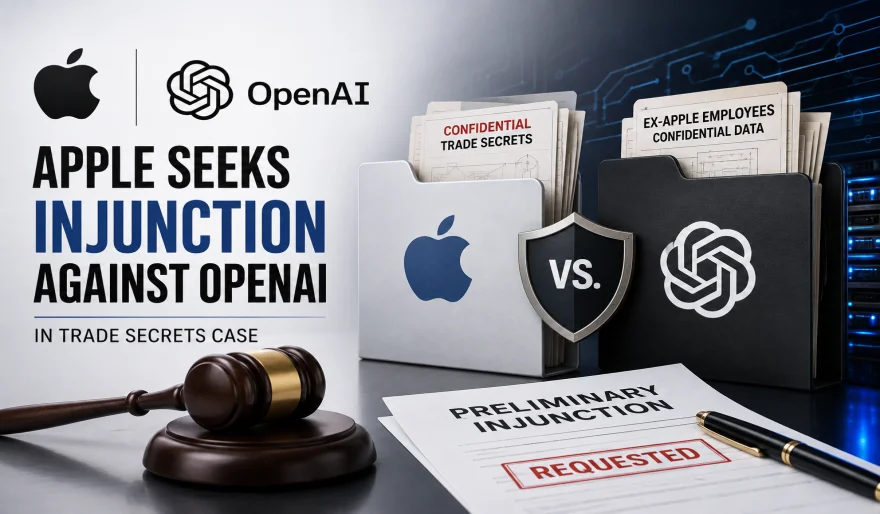
The legal battle between Apple and OpenAI is intensifying.
Apple has filed for a preliminary injunction in its trade secrets case, arguing that it faces irreparable harm unless the court immediately restricts OpenAI and two former Apple engineers from using or accessing alleged confidential information. The company is also seeking expedited discovery, including documents and depositions, as it builds its case.
At the center of the dispute are former Apple employees Chang Liu and Tang Tan, now working at OpenAI. Apple alleges they improperly retained or accessed proprietary hardware information that could benefit OpenAI's push into AI-powered consumer devices. OpenAI strongly rejects the claims, saying it neither possesses nor wants Apple's trade secrets and has publicly released emails and messages it says contradict Apple's allegations.
The case comes at a pivotal moment as OpenAI expands its hardware ambitions following its acquisition of io Products and recruitment of hundreds of former Apple employees. A court decision on the injunction could influence how quickly those plans move forward.
Why it matters
This isn't just a corporate legal dispute—it's a battle over talent, intellectual property, and the future of AI hardware. The outcome could shape how aggressively AI companies recruit from competitors and protect proprietary technology.
The upside
- Reinforces the importance of protecting intellectual property.
- Could establish clearer legal boundaries for AI talent recruitment.
- Highlights the growing value of AI hardware innovation.
The downside
- A prolonged legal fight could delay product development.
- Increased legal scrutiny may slow hiring across the AI industry.
- The dispute could further strain relationships between major AI companies.
Looking ahead
As AI companies race to build the next generation of consumer devices, intellectual property is becoming as valuable as the AI models themselves. The outcome of Apple's injunction request could set an important precedent for how future AI hardware battles are fought.















 AI Agents