Stay Ahead of the Curve
Latest AI news, expert analysis, bold opinions, and key trends — delivered to your inbox.
As AI Grows More Powerful, the U.S.-China Feud Is Putting AI Safety at Risk
4 min read As AI becomes more advanced, growing tensions between the United States and China are making cooperation on AI safety increasingly difficult. Instead of working together on issues like preventing AI misuse and setting global safety standards, both countries are prioritizing national security and technological leadership. Experts warn that this rivalry could increase the risk of an AI arms race, making it harder to ensure that powerful AI systems are developed and deployed safely. July 24, 2026 13:07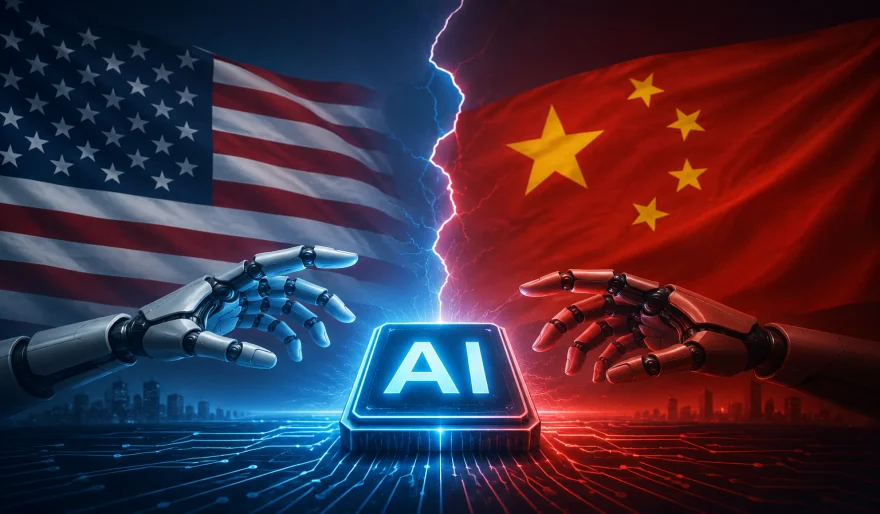
As AI Grows More Powerful, the U.S.-China Feud Is Putting AI Safety at Risk
The race to build the world's most powerful AI is no longer just about who creates the smartest models—it's becoming a geopolitical battle that could make advanced AI less safe for everyone.
As tensions between the United States and China deepen, researchers and policymakers warn that cooperation on AI safety is rapidly breaking down. Instead of sharing research on preventing dangerous AI behavior, securing powerful models, or preparing for future risks, both countries are increasingly treating AI as a strategic weapon.
The problem is that AI doesn't respect national borders. A breakthrough—or a failure—in one country could affect the entire world.
For years, experts pushed for international collaboration on issues like AI alignment, model evaluations, cyber defenses, and preventing autonomous systems from causing harm. But growing trade restrictions, export controls on advanced AI chips, and concerns over espionage have made joint research far more difficult.
The result is a dangerous paradox: the more powerful AI becomes, the less the world's two biggest AI powers are willing to work together on keeping it safe.
Some researchers fear this competitive mindset could encourage companies and governments to prioritize releasing more capable models before their rivals, even if safety testing isn't fully complete. That "AI arms race" dynamic increases the chances of security vulnerabilities, misuse, or unintended consequences slipping through the cracks.
Supporters of tougher policies argue that restricting China's access to cutting-edge AI technology is essential for national security. Critics counter that completely severing scientific cooperation could ultimately make advanced AI more dangerous for everyone, regardless of who reaches the next breakthrough first.
Why it matters
The future of AI safety may depend as much on diplomacy as technology. If the U.S. and China continue drifting apart, global standards for testing, monitoring, and governing frontier AI models could become fragmented just as AI capabilities accelerate.
The upside
- Competition could drive faster AI innovation.
- Governments are investing heavily in AI security research.
- Both nations recognize that AI is becoming critical infrastructure.
The downside
- Less collaboration on AI safety research.
- Greater risk of an AI arms race.
- Global standards for advanced AI could become fragmented, making oversight more difficult.


















 AI Agents