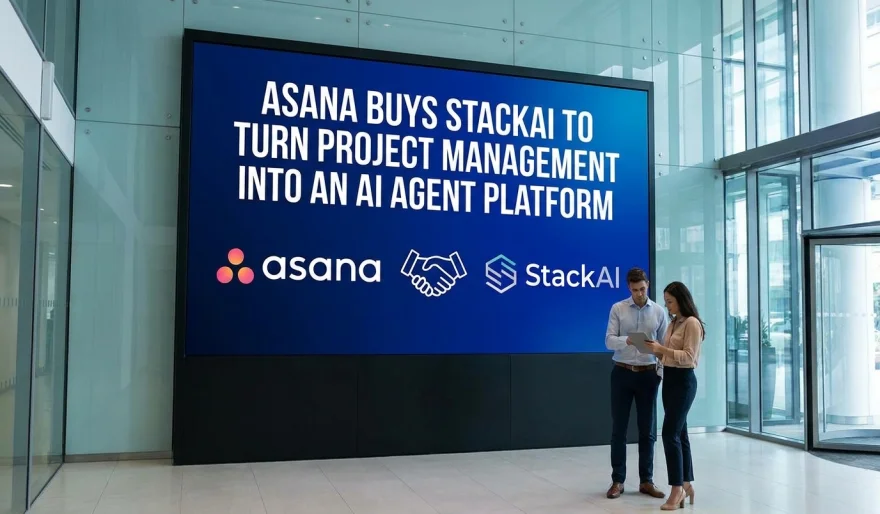
Asana Buys StackAI to Turn Project Management Into an AI Agent Platform
4 min readAsana has acquired StackAI, a no-code AI agent builder, signaling its shift from traditional task management into an AI-native workflow platform where users can deploy agents to execute work, not just organize it. The move positions Asana to compete in the emerging AI productivity race, offering faster automation and deeper enterprise adoption, but also raises risks around integration challenges, platform dependence, and whether AI agents will eventually move beyond single SaaS ecosystems.May 29, 2026 14:22
Asana has acquired StackAI, a no-code AI agent-building platform, in a move that signals a much deeper shift in the productivity software landscape — from traditional task management into full AI-native workflow orchestration.
StackAI allows users to build and deploy AI agents without coding, automating tasks like data processing, research, content generation, and internal operations. By absorbing this capability, Asana is no longer positioning itself as just a project management tool for tracking work — it’s evolving into a system where the work itself can be executed by AI agents inside the platform.
The timing is important. Productivity software is currently being reshaped by a wave of AI-native competitors, where tools are no longer just organizing tasks but actively performing them. Slack, Notion, Microsoft, and a growing list of startups are all racing to embed agent-like intelligence directly into workflows. Asana’s acquisition is a defensive and offensive move at the same time: defensive, because traditional SaaS is under pressure; offensive, because owning StackAI gives Asana a direct entry point into the emerging “AI workforce layer.”
The strategic upside is clear. If integrated well, Asana could shift from being a coordination tool to becoming an execution engine for businesses — where users don’t just assign tasks, they deploy agents that complete them. That could dramatically increase retention, pricing power, and enterprise adoption.
But there are real risks. No-code AI agent platforms are still early and unstable in many enterprise environments. Integration complexity, security concerns, and unpredictable agent behavior could slow adoption. There’s also the bigger structural risk: Asana is betting that the future of work happens inside its platform, but AI agents may instead become cross-platform utilities that reduce dependence on any single SaaS tool.
Why it matters is simple: this deal is another signal that productivity software is being rebuilt from the ground up. The next phase of SaaS won’t just help you manage work — it will increasingly do the work for you.
Comments will not be approved to be posted if they are SPAM, abusive, off-topic, use profanity, contain a personal attack, or promote hate of any kind.