Stay Ahead of the Curve
Latest AI news, expert analysis, bold opinions, and key trends — delivered to your inbox.
ByteDance Just Launched Seedance 2.0
4 min read ByteDance has launched Seedance 2.0, a new AI model designed to generate content, improve recommendations, and power AI features across its platforms like TikTok. The system uses generative and multimodal AI to create and personalize content at scale, helping creators, advertisers, and developers work faster and smarter. The launch signals ByteDance’s push to build its own AI stack and compete more aggressively in the global AI race. February 12, 2026 16:11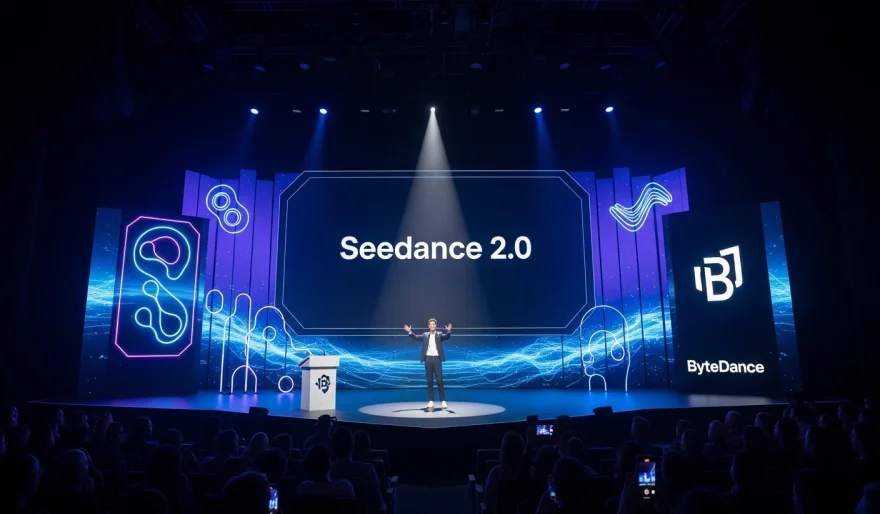
ByteDance’s Seed Team has officially launched Seedance 2.0, a next-generation AI model designed to power smarter content creation, recommendations, and generative AI across its platforms.
This isn’t just another model update.
It’s ByteDance’s attempt to build its own AI engine — independent of Western tech giants.
🧠 How Seedance 2.0 Works
Seedance 2.0 is a large-scale AI system designed to understand, generate, and optimize content.
At its core, it combines:
-
Generative AI to create text, images, and possibly video content.
-
Recommendation intelligence to predict what users want to see.
-
Multimodal processing to analyze text, visuals, and behavioral data together.
In simple terms:
Seedance 2.0 learns from massive data and uses AI to create, rank, and personalize content at scale.
👥 Who Seedance 2.0 Is For
1) ByteDance Platforms
-
TikTok / Douyin
-
Content creators
-
Advertisers
Seedance 2.0 can improve content discovery, automate creative workflows, and boost engagement.
2) Developers & AI Teams
-
Internal ByteDance engineers
-
AI researchers
-
Product teams
It provides a foundation for building new AI-powered features and tools.
3) Businesses & Brands
-
Marketing teams
-
Media companies
-
E-commerce platforms
Seedance 2.0 can help generate ads, optimize campaigns, and personalize user experiences.
🚀 What Seedance 2.0 Can Do
-
Generate content faster and cheaper than humans.
-
Improve TikTok’s recommendation algorithm.
-
Power AI-driven ads and marketing tools.
-
Assist creators with scripts, captions, and ideas.
-
Enable smarter automation across ByteDance products.
⚠️ Why This Matters
ByteDance is doing what every Big Tech company wants:
👉 Owning the entire AI stack — models, chips, data, and distribution.
If Seedance 2.0 succeeds:
-
ByteDance reduces dependence on Nvidia and Western AI models.
-
TikTok becomes not just a social app, but an AI platform.
-
China strengthens its position in the global AI race.
🌍 The Bigger Picture
Seedance 2.0 shows a clear trend:
The future of AI won’t be controlled by one country or one company.
Silicon Valley has OpenAI and Google.
China has ByteDance and Alibaba.
And the real competition isn’t just about models —
it’s about who controls attention, data, and intelligence.








 AI Agents