Stay Ahead of the Curve
Latest AI news, expert analysis, bold opinions, and key trends — delivered to your inbox.
China Accuses U.S. of 'AI Hegemonism' as AI Trade War Escalates
4 min read China has accused the United States of practicing "AI hegemonism" after Washington threatened investigations, sanctions, and trade restrictions against Chinese AI firms over alleged intellectual property theft. Beijing says it will take "all necessary measures" to defend its companies, marking another sharp escalation in the global AI race. July 27, 2026 14:54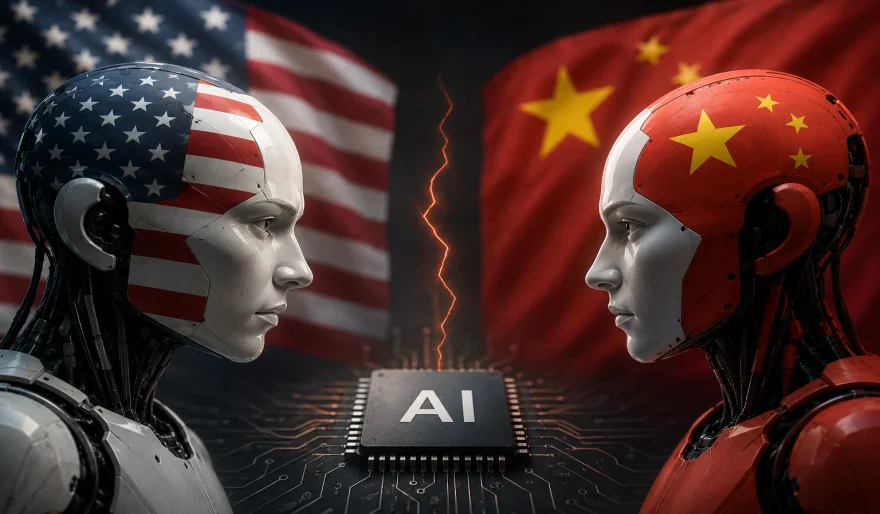
The battle between the world's two AI superpowers just entered a more dangerous phase.
China's Commerce Ministry on Monday condemned the United States for what it called "AI hegemonism," accusing Washington of using national security and intellectual property claims to suppress Chinese AI companies. The warning came after senior U.S. officials said several Chinese firms could face investigations, sanctions, or export restrictions over allegations they copied American AI technology.
At the center of the dispute is Moonshot AI, the Beijing-based startup behind the recently launched Kimi K3 model. U.S. officials allege the company used large-scale "model distillation"—extracting outputs from Anthropic's Claude Fable 5 model—to accelerate development. Washington argues that while model distillation can be legitimate, industrial-scale extraction that crosses into intellectual property theft is not.
China rejects those accusations, insisting there is no factual or legal basis for punitive action. Moonshot AI also denies relying on stolen technology, saying Kimi K3's performance comes from original architectural innovations rather than copied models.
The stakes extend far beyond one company.
U.S. Treasury Secretary Scott Bessent has warned that Chinese firms found violating American IP could be placed on the Commerce Department's Entity List, limiting their access to critical U.S. chips and AI technologies. Such a move would echo previous restrictions imposed on Huawei and other Chinese tech giants.
This latest clash reflects a broader shift in the AI race. What began as competition over better models is rapidly evolving into a geopolitical struggle over semiconductor access, intellectual property, open-source AI, and global AI governance. With both nations increasingly viewing AI as a strategic national asset, future disputes are likely to involve trade policy as much as technological innovation.
Why it matters
The conflict could reshape the global AI industry. New sanctions or export controls may disrupt AI supply chains, limit cross-border collaboration, and accelerate the push for separate U.S. and Chinese AI ecosystems. For developers, businesses, and investors, the AI race is becoming as much about geopolitics as it is about technology.



















 AI Agents