Stay Ahead of the Curve

Latest AI news, expert analysis, bold opinions, and key trends — delivered to your inbox.

Data Center Backlash Goes National as 142 Protests Sweep Across 42 U.S. States

4 min read Opposition to AI infrastructure is no longer limited to local communities. Protesters organized 142 demonstrations across 42 U.S. states, signaling that data center expansion has become a nationwide political and environmental issue. July 20, 2026 11:13 Data Center Backlash Goes National as 142 Protests Sweep Across 42 U.S. States
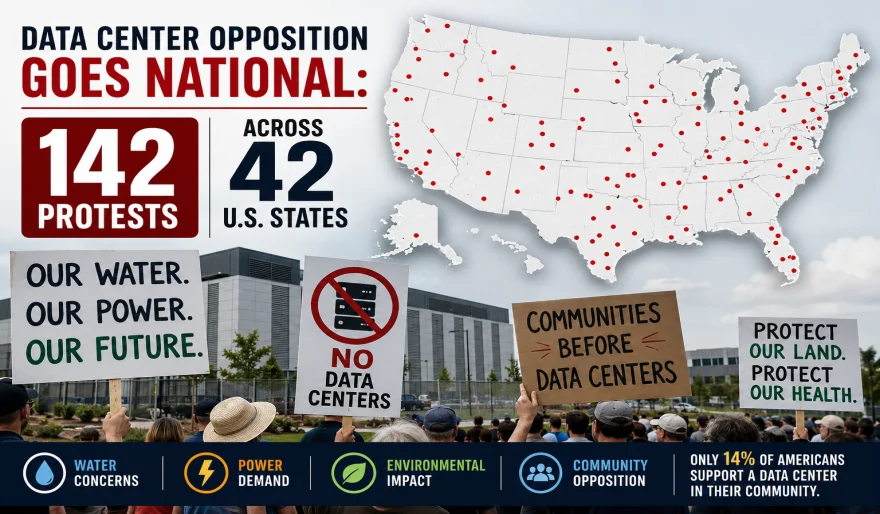
The rapid AI boom is fueling an equally fast-growing backlash.

On July 18, opponents of large-scale data center construction held coordinated protests across 42 U.S. states—the first nationwide movement targeting the infrastructure powering artificial intelligence. Organizers say the demonstrations were driven by concerns over water consumption, electricity demand, environmental impact, and a lack of transparency in how new facilities are approved.

Texas recorded the highest number of protests, but demonstrations stretched from California to Georgia, highlighting that resistance is no longer confined to a handful of communities. A recent Reuters/Ipsos poll also found that only 14% of Americans would support an AI data center being built in their own community.

The data center industry argues these facilities are essential for AI innovation, economic growth, and maintaining U.S. competitiveness. Industry groups also say companies are working with local governments to reduce environmental impacts and improve community engagement.

Still, the growing wave of opposition suggests that building the infrastructure behind AI could become just as challenging as developing the AI models themselves.

Why It Matters

The AI race isn't only about creating smarter models anymore—it's also about securing enough power, land, and public support to build the massive data centers those models require. As community resistance grows, developers could face longer approval processes, stricter regulations, and higher construction costs.

The Upside

Greater public scrutiny could encourage more energy-efficient data centers, better environmental standards, and stronger partnerships with local communities.

The Downside

Delays, legal battles, and new restrictions could slow AI infrastructure expansion at a time when demand for computing power is surging.

Looking Ahead

The next phase of the AI race may be decided as much in city council meetings and public hearings as in research labs. Winning public trust is becoming just as important as building bigger AI models.

User Comments (0)

Add Comment
We'll never share your email with anyone else.

img