Stay Ahead of the Curve
Latest AI news, expert analysis, bold opinions, and key trends — delivered to your inbox.
DeepL Steps Into Voice Translation as It Expands Beyond Text
4 min read DeepL is expanding beyond text translation into real-time voice translation, aiming to enable live spoken conversation across different languages, including potential use in tools like Zoom and Microsoft Teams. April 16, 2026 10:59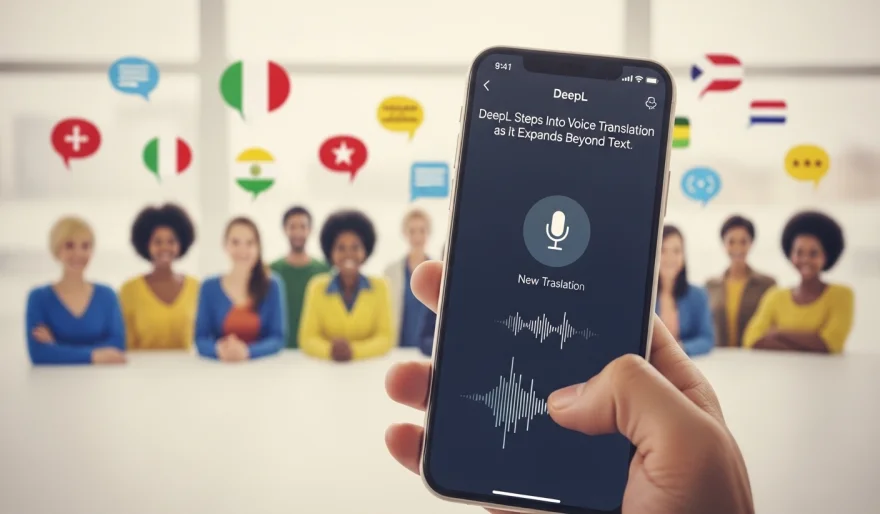
DeepL made its name quietly beating giants at text translation. Now it’s aiming for something bigger—and much harder: real-time spoken language.
DeepL, the AI translation company known for its highly accurate text translations, is officially expanding into voice translation, signaling a major shift in its product strategy.
The company is building tools that can translate spoken conversations in real time, allowing people speaking different languages to communicate seamlessly across meetings, calls, and live interactions.
This move puts DeepL directly into competition with players like Google and Microsoft, who have already been investing heavily in voice and live translation systems.
What’s changing
Until now, DeepL’s strength has been its precision in written language—often praised for sounding more natural and context-aware than many competitors.
But voice translation introduces a new layer of complexity:
- It must process speech instantly, not just text
- It has to understand tone, pacing, and interruptions
- It must deliver translated speech with minimal delay
- It needs to work reliably in noisy, real-world environments
DeepL is reportedly working on integrating this capability into video conferencing tools like Zoom and Microsoft Teams, making it useful for global business communication.
Why this matters
Voice translation is one of the most competitive frontiers in AI right now.
If DeepL succeeds, it could move from being a “better translator” to a real-time communication layer for global business.
That would be a major step beyond text translation—turning language itself into something close to an invisible background process.
But the challenge is steep. Real-time voice AI requires low latency, high accuracy, and strong contextual understanding—all at once.
The bigger picture
This expansion reflects a broader shift in AI: tools are moving from static outputs (like text) to live, interactive systems that operate in real time.
For DeepL, it’s also a strategic move to defend its position as competition intensifies from tech giants with far larger ecosystems.
Bottom line
DeepL isn’t just translating words anymore—it’s trying to translate conversations as they happen, turning language barriers into something that simply disappears in real time.















 AI Agents