Stay Ahead of the Curve
Latest AI news, expert analysis, bold opinions, and key trends — delivered to your inbox.
Gemini's Personalized AI Image Generator Is Now Free for U.S. Users
3 min read Google has made Gemini's personalized AI image generation available for free to U.S. users, letting anyone create images tailored to their interests, history, and preferences. June 30, 2026 16:01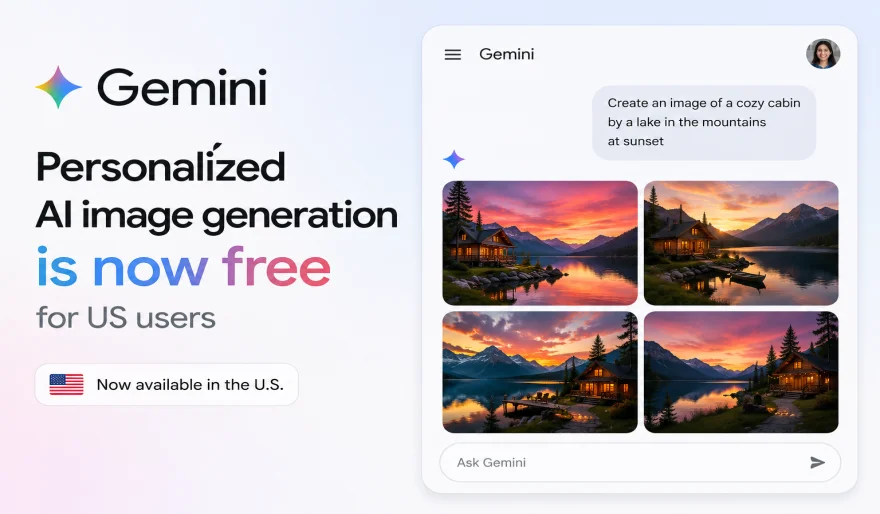
Google is bringing personalized AI image generation to the masses.
The company has expanded a feature previously limited to paid users, allowing anyone in the U.S. to generate images in Gemini that are customized using information they've shared with the AI—such as hobbies, favorite colors, professions, travel interests, or past conversations.
Instead of generating generic artwork, Gemini can produce images that feel uniquely yours. Ask for a birthday invitation, YouTube thumbnail, social media graphic, or wallpaper, and the AI can incorporate details it already knows about your preferences to deliver more relevant results.
Users remain in control of what Gemini remembers. Personalization is optional, and memory settings can be viewed, edited, or turned off at any time, giving users transparency over how their information is used.
The rollout is part of Google's broader strategy to make Gemini feel more like a personal AI assistant rather than just a chatbot. As competition intensifies with ChatGPT, Claude, and Grok, personalization is quickly becoming one of the biggest differentiators in consumer AI.
Why it matters
AI image generation is evolving from creating beautiful pictures to creating personalized content. The more context an AI has, the more useful—and unique—its outputs become.
The upside
- Free access for U.S. users.
- Images tailored to individual preferences.
- Faster creation of personalized social posts, invitations, marketing assets, and creative projects.
The downside
Personalized generation relies on user data and memory, meaning some users may have privacy concerns even with Google's memory controls.
Looking ahead
The future of AI won't just be about generating content—it will be about generating your content. As AI assistants become increasingly personalized, generic prompts may give way to AI experiences that understand your style, preferences, and creative workflow.




 AI Agents