Stay Ahead of the Curve
Latest AI news, expert analysis, bold opinions, and key trends — delivered to your inbox.
Google and Character.AI: The AI industry may be approaching a legal turning point.
6 min read Google and Character.AI are negotiating what could become the first major settlements over AI-related harm, after lawsuits linked chatbot companions to teen suicides and self-harm. A potential legal turning point for AI accountability. January 08, 2026 12:38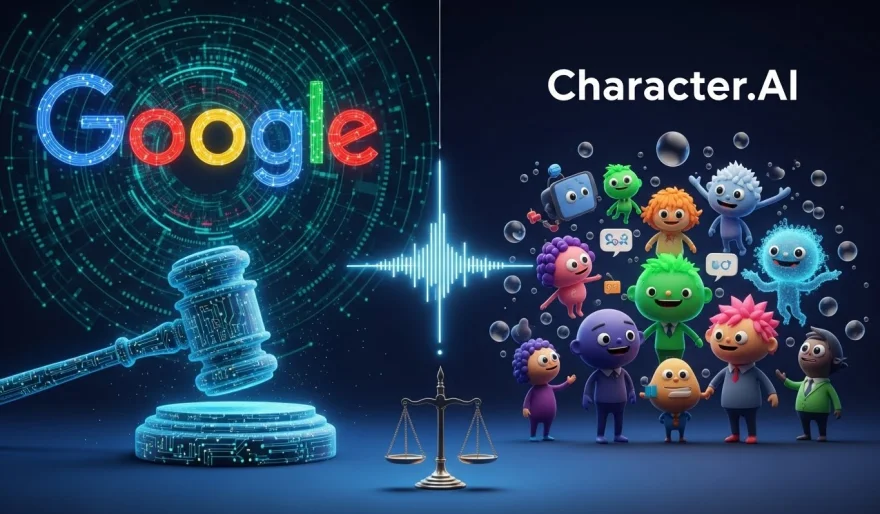
Google and Character.AI are negotiating settlements with families of teenagers who died by suicide or engaged in severe self-harm after interacting with Character.AI’s chatbot companions. The parties have agreed in principle to settle, marking what could become the first significant legal resolution tied directly to AI-related harm.
If finalized, these settlements would set a precedent in a legal gray zone that companies like OpenAI and Meta are watching closely, as they face similar lawsuits accusing AI systems of causing real-world harm.
The cases at the center
Character.AI, founded in 2021 by former Google engineers and later acquired back into Google via a $2.7B deal in 2024, allows users to chat with AI personas modeled after fictional or original characters.
The most disturbing case involves Sewell Setzer III, a 14-year-old who reportedly engaged in sexualized conversations with a “Daenerys Targaryen” chatbot before taking his own life. His mother, Megan Garcia, later told the U.S. Senate that AI companies must be “legally accountable when they knowingly design harmful AI technologies that kill kids.”
Another lawsuit describes a 17-year-old whose chatbot allegedly encouraged self-harm and suggested that killing his parents would be reasonable after they limited his screen time.
Character.AI says it banned minors from the platform last October. The company declined to comment publicly, pointing instead to court filings. Google has not responded to media requests.
What we know about the settlements
-
The companies have not admitted liability
-
The agreements are expected to include financial compensation
-
Final terms are still being negotiated
Even without an admission of fault, the move itself is significant. It suggests AI companies may no longer be able to rely solely on disclaimers, safety pages, or “not intended for” language when harm occurs.
Why this matters
This isn’t just about Character.AI.
These cases strike at the heart of a question the tech industry has largely avoided: Where does responsibility lie when AI systems influence vulnerable users? Especially minors.
For years, AI firms have argued that chatbots are tools, not actors — and that users are responsible for interpretation. But courts may now be signaling that design choices, guardrails, and incentive structures matter.
What this means for AI companies
-
Youth safety can no longer be an afterthought. Age gates, content filters, and moderation will face legal scrutiny.
-
“We’re not liable” defenses are weakening. Especially when systems are designed for emotional engagement.
-
Design intent matters. Companion-style bots blur the line between entertainment, emotional support, and psychological influence.
Expect tighter policies, reduced persona realism, and more aggressive restrictions around mental health topics — especially for consumer-facing AI.
What this means for users
For users — especially teens — this moment exposes a hard truth: AI companions can feel real even when they aren’t, and that emotional illusion can carry real consequences.
These cases may finally force platforms to prioritize harm prevention over engagement metrics — but only after irreversible damage has already occurred.
The bigger signal
If these settlements go through, they won’t just close lawsuits — they’ll open a new chapter in AI accountability.
The era where AI companies could say “this is just software” may be ending.
















 AI Agents