Stay Ahead of the Curve
Latest AI news, expert analysis, bold opinions, and key trends — delivered to your inbox.
Google Is Reading Old News to Predict Flash Floods
4 min read Flash floods are deadly and hard to predict due to sparse real-time measurements. Google is training AI to read decades of historical news reports alongside environmental data, teaching machines to spot patterns and improve early warning predictions. By combining human narratives with weather data, this approach could save lives and reshape how AI tackles fast-moving natural disasters. March 12, 2026 13:43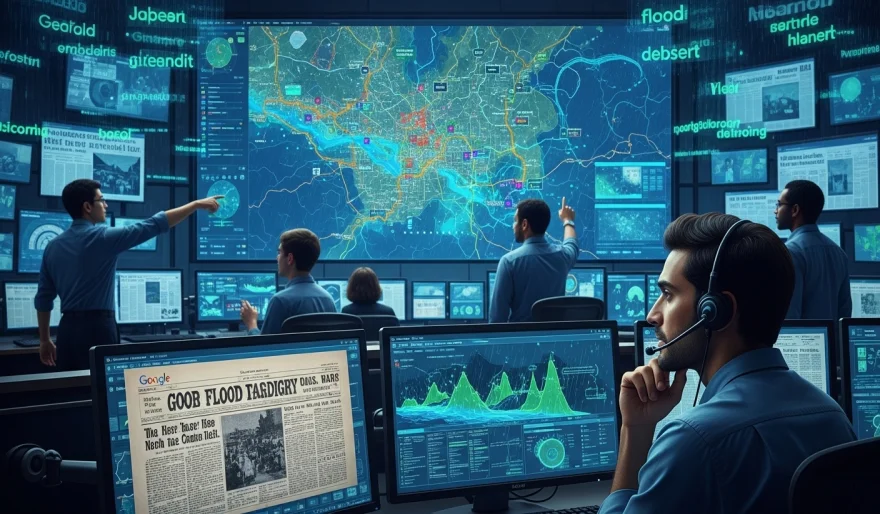
Flash floods are among the world’s deadliest weather events, killing over 5,000 people every year, and they’re notoriously hard to predict because they strike fast and in very localized areas. Traditional weather models struggle with this — not because physics doesn’t work, but because there simply isn’t enough reliable measurement data for these short‑lived events. Temperature, winds, and river gauges are tracked constantly around the globe. Flash floods? Not so much.
That’s where an unexpected source of information has come into play: news reports.
Google’s researchers realized that decades of news stories contain rich, time‑stamped accounts of flash floods — where they happened, when they happened, and what the impacts were. These narratives capture events that formal weather networks often miss or record imperfectly because there’s no instrument sitting in every flooded canyon or urban street.
By training AI models on this trove of historical reporting alongside traditional weather and environmental data, Google believes it can teach machines what a flash flood “looks like” in context — patterns in rainfall, soil saturation, terrain, and now, human‑reported outcomes.
In essence, the AI isn’t just crunching numbers anymore. It’s reading, learning from how journalists described flash floods over years, and using that to fill in a data gap conventional sensors leave behind.
Instead of replacing meteorology, this approach augments it — using language and context from past events to make predictions where raw measurements are too sparse to be useful on their own.
This is noteworthy for a few reasons:
-
🔍 It blends human narrative with machine prediction. Most weather models rely exclusively on physical measurements. Google’s approach says, “History matters — even if it’s buried in text.”
-
☁️ It could materially improve early warnings. Flash floods give people little time to react. If AI can learn a better early signature, even minutes of advanced notice can save lives.
-
🤖 It redefines what useful training data looks like. Instead of only sensor logs, we’re teaching AI with stories — public, descriptive, unstructured text — and that could open new frontiers in forecasting.
Of course, this isn’t magic. There are challenges — biases in reporting, gaps in media coverage, and the need to carefully align narrative data with physical events. But the idea itself is a striking example of how AI can help tackle real‑world problems by knitting together disparate data sources that humans alone haven’t fully leveraged.
In short: Google isn’t just building better weather AI — it’s augmenting it with our collective memory of disasters. And in a world where climate extremes are increasing, that kind of innovation isn’t just clever — it might be lifesaving.














 AI Agents