Stay Ahead of the Curve
Latest AI news, expert analysis, bold opinions, and key trends — delivered to your inbox.
IBM Plans to Triple Entry-Level Hiring Despite AI Fears
3 min read IBM plans to triple its U.S. entry-level hiring in 2026, even as AI is expected to automate many junior roles. Instead of cutting back, IBM is redesigning these jobs to focus less on automatable tasks like coding and more on human-centered skills such as customer engagement — signaling a shift in how companies may adapt their workforce in the AI era. February 13, 2026 11:26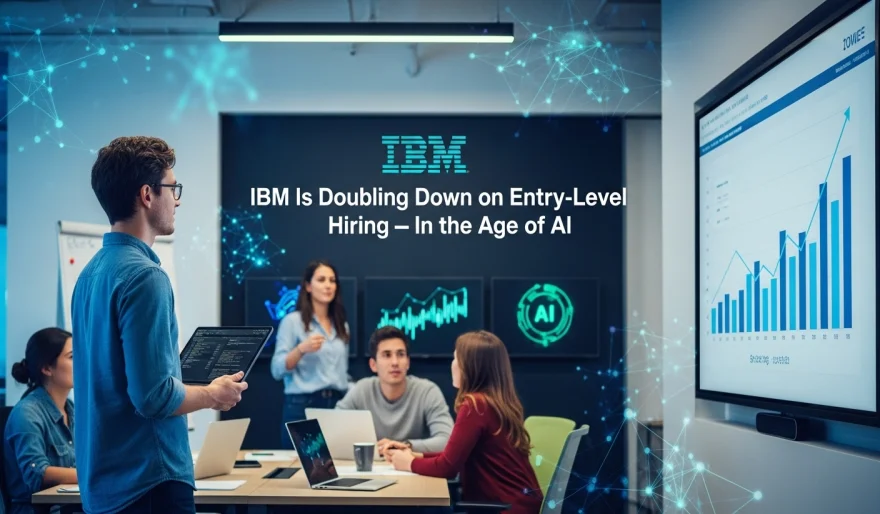
While everyone says AI will wipe out entry-level jobs, IBM is doing the opposite.
The company plans to triple its U.S. entry-level hiring in 2026, even for roles many believe AI can already automate.
Yes — including the ones we’ve been told “AI can do.”
What’s Really Going On
IBM’s HR chief revealed that the company is redesigning entry-level roles to be less focused on tasks AI can easily handle (like pure coding) and more centered on human skills — customer engagement, collaboration, and applied problem-solving.
In short:
They’re not fighting AI.
They’re redesigning jobs around it.
Why This Matters
This move challenges one of the loudest narratives in tech right now — that entry-level roles are doomed.
IBM seems to understand something deeper:
If you stop hiring juniors today, you won’t have seniors tomorrow.
Even if AI reduces headcount needs in the short term, companies still need to build future leadership pipelines.
The Bigger Picture
2026 is shaping up to be a defining year for AI’s labor impact.
-
An MIT study estimates nearly 12% of jobs could already be automated.
-
Investors increasingly expect AI to start reshaping hiring patterns soon.
But IBM’s bet suggests a more nuanced future:
AI won’t eliminate entry-level work.
It will transform what “entry-level” even means.
The Hidden Insight
The real risk isn’t that AI replaces all junior roles.
It’s that companies who stop investing in early talent may struggle to grow in an AI-powered world.
IBM isn’t just hiring.
It’s future-proofing its workforce.














 AI Agents