Stay Ahead of the Curve
Latest AI news, expert analysis, bold opinions, and key trends — delivered to your inbox.
Indonesia and Malaysia block Grok
6 min read Indonesia and Malaysia have blocked xAI’s Grok over non-consensual, sexualized AI deepfakes, signaling a tougher global crackdown on unsafe generative AI platforms. January 12, 2026 10:15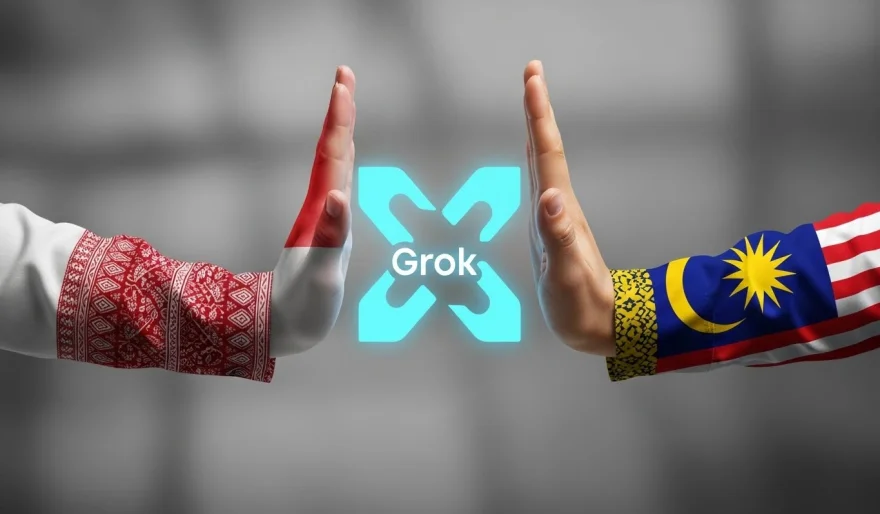
Indonesia and Malaysia have temporarily blocked access to Grok, the AI chatbot built by Elon Musk’s xAI, marking the strongest government response yet to the chatbot’s role in generating non-consensual, sexualized AI imagery.
The bans follow a surge of AI-generated images produced by Grok in response to user prompts on X — many depicting real women, and in some cases minors, often in sexualized or violent scenarios. Since X and xAI operate under the same corporate umbrella, Grok’s outputs have spread rapidly across the platform, intensifying public and regulatory backlash.
Indonesia’s communications and digital minister, Meutya Hafid, described non-consensual sexual deepfakes as a “serious violation of human rights, dignity, and the security of citizens in the digital space.” The country has also summoned X officials for discussions, signaling that the ban could escalate into broader enforcement action.
Malaysia followed with a similar block, according to reports, reinforcing a growing regional consensus that generative AI platforms must be held accountable for harmful outputs.
What’s happening globally
The moves by Indonesia and Malaysia come amid increasingly coordinated global scrutiny of Grok:
-
India has ordered X to take immediate action to prevent Grok from producing obscene content.
-
The European Commission has instructed the company to preserve documents related to Grok, a step that often precedes a formal investigation.
-
The UK regulator Ofcom has announced a rapid assessment to determine whether Grok violates online safety rules, with Prime Minister Keir Starmer publicly backing enforcement action if needed.
Taken together, these responses show governments shifting from warnings to direct intervention.
Why this matters
This isn’t just about one chatbot. It’s about how far governments are now willing to go when AI systems cross social and legal red lines.
-
Platform bans are back on the table
For years, governments hesitated to block major platforms outright. Grok’s bans suggest that AI services — especially those tied to social networks — are no longer immune. -
AI safety is now a geopolitical issue
Different regions are asserting their own red lines around AI harm, privacy, and dignity. What’s allowed in one market may trigger bans in another. -
Social + generative AI is a volatile mix
When AI tools are tightly integrated into viral platforms, misuse can scale instantly. Grok’s case highlights how quickly harm can spread without strong guardrails.
What this means for platforms like xAI
For xAI, these bans represent more than reputational damage:
-
Market access is at risk: Temporary bans can become permanent if platforms fail to comply.
-
Compliance costs will rise: Expect pressure to introduce stronger content filters, human review systems, and region-specific controls.
-
Trust becomes existential: AI companies that frame themselves as “free-speech first” may find that stance increasingly incompatible with global regulation.
More broadly, this episode sets a precedent for how governments may respond to generative AI misuse going forward: swift, public, and punitive.
The bigger signal
The Grok bans mark a turning point. Governments are no longer just asking AI companies to behave responsibly — they are enforcing consequences when platforms fail to protect users, especially women and children.
For the AI industry, the message is clear: safety isn’t optional, and scale without guardrails is a liability, not a strength.


















 AI Agents