Stay Ahead of the Curve
Latest AI news, expert analysis, bold opinions, and key trends — delivered to your inbox.
Intel Earnings Preview: Turnaround Hopes Rise as AI Data Center Boom Lifts Server Chip Demand
4 min read Intel’s earnings will test whether its long-awaited turnaround is real. Investors are watching if CEO Lip-Bu Tan’s reset is taking hold, as AI data center buildouts drive demand for Intel’s core server chips — even while it still trails in AI accelerators. January 21, 2026 13:43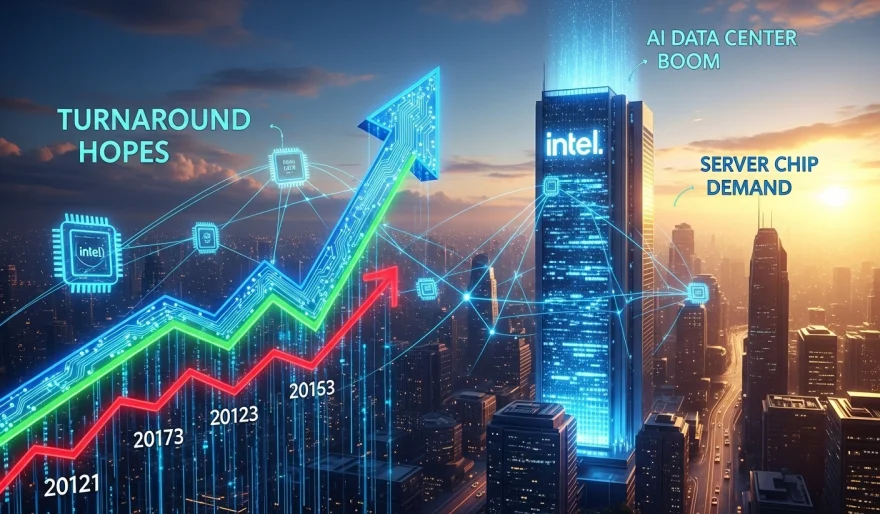
Intel’s upcoming earnings are shaping up to be its most important checkpoint in years.
For the first time in multiple quarters, shareholders are cautiously optimistic — not because Intel suddenly won the AI race, but because its long-promised turnaround may finally be showing early signs of life.
At the center of that optimism is CEO Lip-Bu Tan, who took the helm after Intel’s brutal 2024 collapse. That year saw the stock crater, thousands of layoffs, and public acknowledgment that Intel had badly misread the AI era, shipping a weak roadmap while Nvidia and AMD sprinted ahead.
Now, investors are betting that the reset is starting to stick.
What’s driving the optimism
Two forces are converging in Intel’s favor:
1. AI data centers still need “boring” chips
While GPUs get all the headlines, massive AI data center buildouts are quietly boosting demand for traditional server CPUs — Intel’s historical stronghold. Every AI cluster still needs general-purpose processors to run workloads, manage memory, and keep systems stable.
That’s giving Intel breathing room — and revenue — even as it plays catch-up in accelerators.
2. Lip-Bu Tan’s credibility trade
Last year, Tan engineered a series of high-profile investments and strategic moves aimed at restoring discipline after years of management missteps. Those actions didn’t fix Intel overnight, but they signaled something investors hadn’t seen in a while: focus.
The market isn’t expecting miracles. It’s looking for proof that Intel can execute, ship on time, and stop losing ground faster than it gains it.
Why this earnings report matters
This isn’t just about quarterly performance — it’s about narrative control.
-
A solid print reinforces the idea that Intel can stabilize its core business while rebuilding
-
Weak guidance risks confirming fears that Intel is stuck in a no-man’s land: behind in AI, under pressure in CPUs, and squeezed by Nvidia and AMD
In other words, Intel doesn’t need to win the AI boom yet. It just needs to show it can survive it long enough to matter again.
The bigger picture
Intel’s story has shifted from “fallen giant” to “possible turnaround candidate.” That’s a meaningful change — but also a fragile one.
AI data centers may be propping up demand today, but long-term relevance will depend on whether Intel can translate that momentum into credible AI silicon, not just legacy server dominance.
This earnings call will tell investors one thing above all else:
Is Intel actually turning the corner — or just benefiting from the AI wave passing by?


















 AI Agents