With layoffs, slow hiring, and rising AI adoption dominating headlines, many assume artificial intelligence is already shrinking the job market. But new data from LinkedIn suggests the story is more complicated.
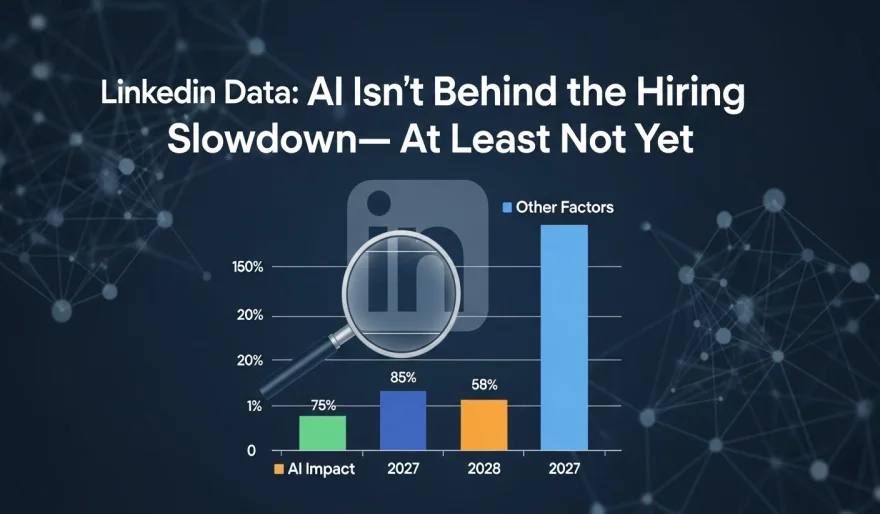
According to insights shared by LinkedIn, hiring has dropped by about 20% since 2022, but the platform says there’s no clear evidence that AI is the cause—at least not yet.
Instead, LinkedIn executives point to broader economic forces, especially higher interest rates and macroeconomic uncertainty, as the main drivers of the hiring slowdown.
They also noted that if AI were already replacing large portions of the workforce, it would show up more clearly in sectors like customer support, marketing, and administrative roles—but so far, that pattern isn’t strongly visible.
What LinkedIn data is actually showing
-
Global hiring is down roughly 20% since 2022
-
The slowdown is consistent across both AI-exposed and non-AI-exposed jobs
-
Entry-level hiring is not falling faster than other segments
-
AI-related roles are still growing, not shrinking
In other words, the job market is cooling—but not in a way that clearly ties back to automation.
Why this matters
The debate around AI and jobs is getting louder, but LinkedIn’s data introduces an important nuance:
Right now, AI looks less like a job destroyer and more like a job shifter—creating new roles while productivity pressures reshape hiring overall.
However, LinkedIn also warns that the skills required for jobs are changing rapidly, with AI expected to dramatically reshape skill demands in the coming years.
The bigger picture
While AI may not be the main driver of today’s hiring slowdown, it’s still influencing how companies recruit, evaluate, and define roles. Recruiters are increasingly using AI tools, and job seekers are being judged on AI literacy more than ever.
So the real question isn’t just whether AI is causing job losses today—but how long before it starts showing up more clearly in the data.
Bottom line
For now, LinkedIn says the hiring slowdown is mostly about the economy—not AI. But with rapid AI adoption across industries, that separation may not hold for long.











 AI Agents