Stay Ahead of the Curve
Latest AI news, expert analysis, bold opinions, and key trends — delivered to your inbox.
Meta Rebuilds Its AI Stack with “Muse Spark” — A Ground-Up Reset
4 min read Meta has unveiled its new Muse Spark model as part of a “ground-up overhaul” of its AI systems. This isn’t just another model release—it signals a deeper architectural reset aimed at improving performance, efficiency, and how AI integrates across Meta’s entire ecosystem. April 09, 2026 12:55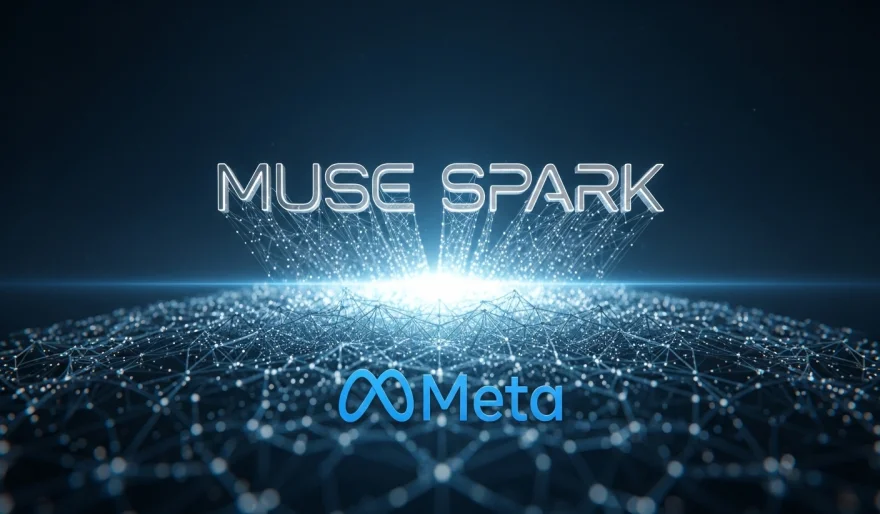
For a while, Meta’s AI strategy looked… scattered.
Open-source pushes.
Multiple model families.
Different teams shipping in parallel.
Powerful—but fragmented.
Muse Spark changes that narrative.
This is Meta stepping back and saying: we need to rebuild the foundation, not just stack improvements on top of it.
And that matters more than it sounds.
Because at this stage of the AI race, marginal gains aren’t enough. The companies pulling ahead are the ones rethinking how models are built, trained, and deployed from first principles.
That’s what a “ground-up overhaul” really implies:
– More efficient training pipelines
– Better alignment between research and product
– Models designed to scale seamlessly across apps
In Meta’s case, that last point is critical.
Unlike competitors focused on a single flagship product, Meta has an entire ecosystem to power—Instagram, WhatsApp, Facebook, ads, messaging, creators.
Muse Spark isn’t just about intelligence.
It’s about integration at scale.
Imagine:
– Smarter content recommendations that adapt in real-time
– AI-generated creatives optimized for ad performance
– Messaging assistants embedded across billions of chats
– Creator tools that generate, edit, and distribute content instantly
This is AI woven into the product layer—not sitting on top of it.
And that’s where Meta could have an edge.
But there’s a strategic tension here.
Meta has been one of the loudest advocates for open-source AI. A ground-up proprietary overhaul raises questions:
Will Muse Spark stay open?
Or is Meta shifting toward tighter control to compete more directly with players like OpenAI and Google?
Because the landscape is changing.
We’re moving from “who has the best model” to who has the best system—models, data, infrastructure, and distribution all tightly integrated.
And Meta is clearly optimizing for that.
There’s also a performance angle.
Efficiency is becoming just as important as capability. Training costs are skyrocketing, and inference at scale is brutally expensive. A redesigned architecture could mean faster models, lower costs, and better margins—especially critical for Meta’s ad-driven business.
Why it matters:
This isn’t just a model launch—it’s Meta re-architecting its AI future. If Muse Spark delivers, it could unlock tighter integration, better performance, and a more unified AI strategy across its entire product ecosystem.
Forward look:
The next wave of AI leaders won’t just ship smarter models—they’ll build tighter, faster, more scalable systems. Muse Spark suggests Meta is done experimenting—and is now engineering for dominance.

















 AI Agents