Stay Ahead of the Curve
Latest AI news, expert analysis, bold opinions, and key trends — delivered to your inbox.
Meta’s Oversight Board Takes On Permanent Bans
5 min read Meta’s Oversight Board is reviewing permanent account bans for the first time in its history. The case involves a high-profile Instagram user banned without hitting the usual strike limit, raising questions about transparency, fairness, and whether permanent bans actually change behavior. The decision could set a major precedent as users increasingly complain about unexplained mass bans. January 20, 2026 12:01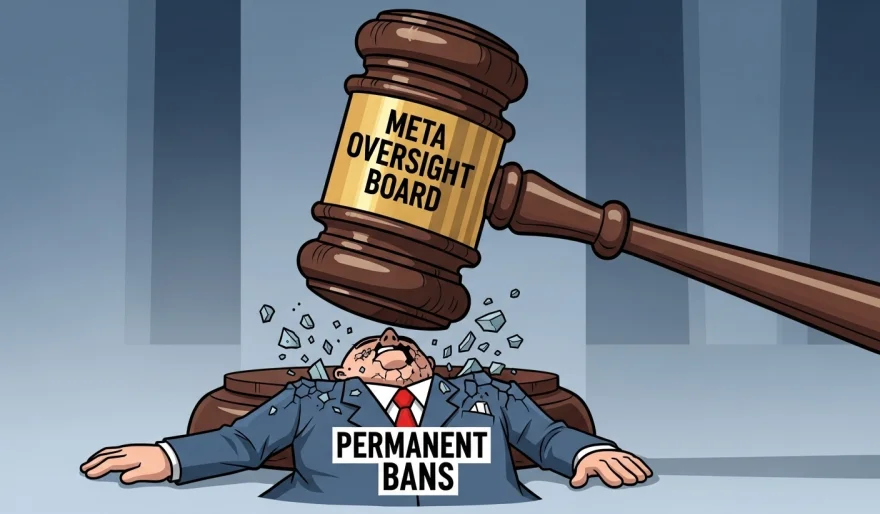
For the first time in its five-year history, the board is reviewing a case centered on permanent account bans — one of the most severe enforcement actions Meta can take. A permanent ban doesn’t just remove content; it wipes out an entire digital identity, including years of posts, social connections, and for creators or businesses, a core channel for income and communication.
The case itself involves a high-profile Instagram user who repeatedly violated Meta’s Community Standards. According to the board, the account posted visual threats of violence against a female journalist, anti-gay slurs targeting politicians, sexual content, and allegations against minority groups. While the account hadn’t technically reached Meta’s automated strike threshold, the company chose to permanently disable it anyway.
That decision — manual, discretionary, and final — is exactly what’s under scrutiny.
Meta has asked the Oversight Board to weigh in on some uncomfortable but increasingly urgent questions:
-
When is a permanent ban justified, especially without hitting strike limits?
-
How transparent should Meta be when accounts are disabled for good?
-
Are current tools actually protecting journalists and public figures from repeated abuse?
-
Do harsh punishments meaningfully change online behavior — or just push it elsewhere?
The timing isn’t accidental. Over the past year, Meta users have complained about mass bans with little to no explanation, often blaming automated moderation systems. Facebook Groups have been hit especially hard, and even Meta’s paid support tier, Meta Verified, has been widely criticized as ineffective when bans occur.
Still, the Oversight Board’s real power remains debatable.
While the board can overturn individual moderation decisions and make policy recommendations, it can’t force systemic change. Major policy shifts — like Meta’s recent move to relax hate speech restrictions — happen without the board’s input. Decisions are also slow, and the board reviews only a tiny fraction of the millions of moderation actions Meta makes each day.
That said, the board isn’t toothless. Meta says it has implemented 75% of the board’s 300+ recommendations so far and generally follows its rulings. The company has even begun consulting the board on newer features like Community Notes, its crowdsourced fact-checking system.
Once the Oversight Board publishes its recommendations on permanent bans, Meta will have 60 days to respond. The board is also accepting public comments — though notably, submissions can’t be anonymous.
The bigger picture:
As platforms lean harder on automation and enforcement at scale, permanent bans are becoming more common — and more controversial. This case could set a precedent for how much explanation users deserve before losing their digital lives forever.
And for creators, journalists, and businesses, that precedent matters more than ever.

















 AI Agents