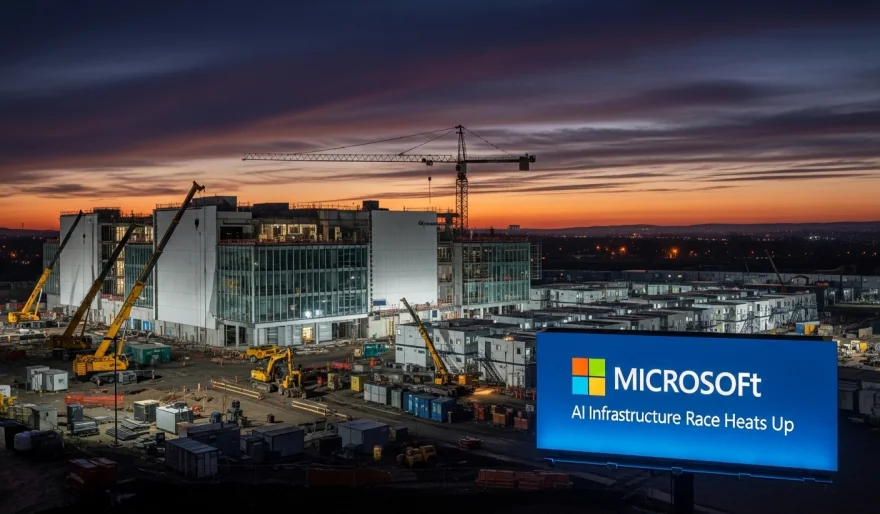
Microsoft is making a strategic grab in the AI infrastructure race—and it’s picking up where others walked away.
According to reports, the company plans to rent a major data center facility in Texas that was previously abandoned by Oracle and OpenAI.
On the surface, it looks like a simple real estate shift.
In reality, it’s something bigger.
What’s really going on
AI demand is exploding—but the infrastructure to support it is struggling to keep up.
Data centers require massive amounts of power, cooling, and long-term investment. Projects get delayed, scaled back, or dropped altogether when costs, energy access, or timelines don’t align.
That’s likely what happened here.
But for Microsoft, this creates an opportunity.
Instead of starting from scratch, it can step into an existing project and accelerate deployment—gaining valuable capacity in a market where every megawatt counts.
Why this matters
We’re entering the second phase of the AI boom.
The first was about building smarter models.
The next is about running them at scale.
And that requires infrastructure—data centers, chips, and energy.
By securing more capacity, Microsoft strengthens its position as a backbone provider for AI services, especially through its cloud ecosystem.
The subtle risk
Taking over a dropped project isn’t always straightforward.
There may be underlying challenges—power constraints, cost overruns, or logistical hurdles—that caused the original players to step back.
If those issues persist, Microsoft could face delays or increased costs.
The bigger picture
This move fits into a broader trend:
AI is no longer just a software race—it’s an infrastructure race.
Companies that control compute capacity will have a major advantage in deploying, scaling, and monetizing AI.
While others focus on models, Microsoft is quietly stacking the physical resources needed to run them.
The takeaway
In the AI era, owning the infrastructure is just as important as building the intelligence.
And Microsoft is making sure it has both.















 AI Agents