Stay Ahead of the Curve
Latest AI news, expert analysis, bold opinions, and key trends — delivered to your inbox.
Musk Confirms Tesla & SpaceX Will Keep Ordering Nvidia Chips at Scale
3 min read Elon Musk confirmed that Tesla and SpaceX will continue ordering Nvidia chips at scale to power AI initiatives. For Tesla, this supports Full Self-Driving and AI vehicle features, while SpaceX uses them for Starlink and spacecraft AI. Securing these high-performance chips ensures both companies maintain a competitive edge amid growing AI demand and supply challenges. March 19, 2026 14:29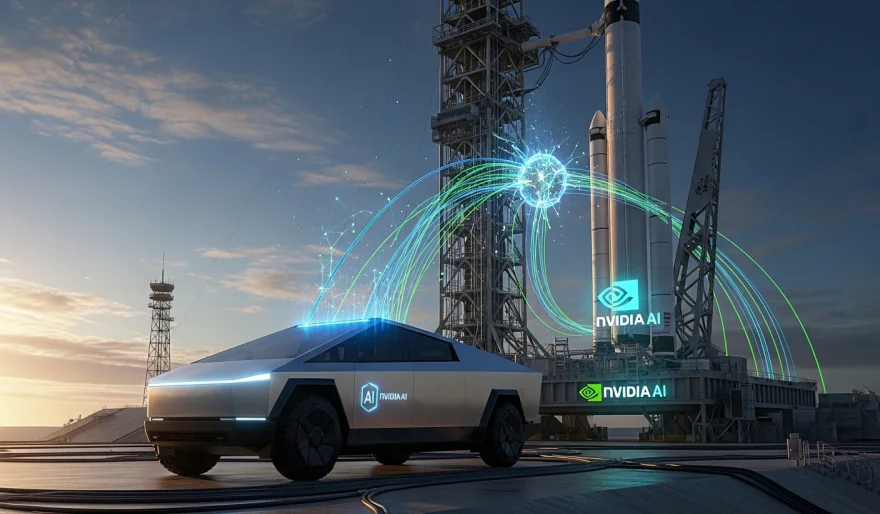
Elon Musk is sending a strong signal to the AI and semiconductor markets: both Tesla and SpaceX are committed to ordering Nvidia chips at scale to power their growing AI ambitions.
Musk emphasized that Tesla’s continued AI chip purchases will sustain the development of its Full Self-Driving (FSD) systems and other AI-driven vehicle features. Meanwhile, SpaceX relies on these chips to enhance Starlink satellite operations and AI-powered spacecraft systems, highlighting the broad reach of AI across both terrestrial and space technologies.
The move underscores a key trend in the tech world: high-performance AI hardware is now a strategic competitive advantage. As AI models grow larger and more complex, companies are recognizing that securing a steady supply of advanced chips is crucial to maintaining an edge. By locking in Nvidia’s GPUs, Musk ensures that Tesla and SpaceX can continue innovating without disruption from global supply shortages or rising competition.
Why this matters: AI compute isn’t just a technical necessity—it’s becoming a core factor in who leads the next generation of AI-driven innovation. For Tesla, it means faster, safer autonomous vehicles. For SpaceX, it translates to smarter satellite networks and more advanced space operations.
In short, Musk’s announcement reinforces the message that chip supply at scale is central to the future of AI. In a world where every millisecond of processing counts, having access to Nvidia’s high-performance GPUs could be the difference between leading the AI race or falling behind.



















 AI Agents