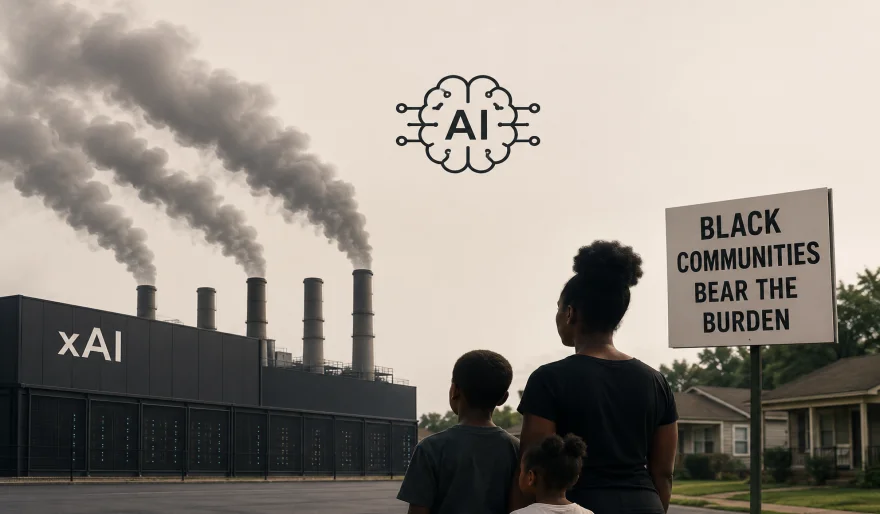
Musk's xAI Power Project Faces Pollution Backlash as Black Communities Bear the Burden
5 min readA Reuters investigation found that Elon Musk's xAI has been operating 59 natural gas turbines without required federal air permits to power its Colossus 2 AI data center. The emissions are falling most heavily on nearby predominantly Black neighborhoods, intensifying concerns over environmental justice and AI's growing energy demands.July 15, 2026 11:23
The AI boom is colliding with environmental concerns.
According to a Reuters investigation, xAI installed dozens of natural gas turbines near its Colossus 2 data center in Tennessee to meet the enormous power demands of training advanced AI models. Regulators say the turbines were operating without the federal clean-air permits normally required for facilities of that size.
The biggest impact is being felt in neighboring communities in Southaven, Mississippi, where many residents are Black and already live in areas with elevated rates of asthma and other respiratory illnesses. The turbines emit pollutants including nitrogen oxides, carbon monoxide, and formaldehyde—raising fears that the rapid expansion of AI infrastructure is worsening existing environmental inequalities.
Civil rights organizations, including the NAACP and the Southern Environmental Law Center, have filed legal challenges, arguing that the project violates the Clean Air Act and places an unfair pollution burden on historically underserved communities. xAI and state regulators have argued that the turbines qualify for exemptions because they are temporary and portable, while the U.S. Justice Department has supported the company's position on national security grounds.
The dispute highlights a growing challenge for the AI industry. As companies race to build larger models, demand for electricity is soaring, forcing firms to secure power by almost any means necessary. That raises difficult questions about whether environmental regulations can keep pace with AI's explosive growth.
Why it matters
The case could become a landmark test of how governments regulate AI infrastructure. It also shines a spotlight on whether the environmental costs of the AI race are being disproportionately shifted onto vulnerable communities.
The upside
Highlights the urgent need for cleaner energy solutions for AI data centers.
Could push the industry toward greater transparency and stricter environmental standards.
May accelerate investment in renewable-powered AI infrastructure.
The downside
Communities near AI facilities could face increased exposure to harmful air pollution.
Legal battles and regulatory scrutiny could slow future AI infrastructure projects.
The controversy may intensify public criticism of AI's environmental footprint.
Bottom line: AI's biggest challenge may not just be building smarter models—it may also be powering them responsibly. The xAI controversy underscores that the race for AI leadership is increasingly becoming a debate over energy, regulation, and environmental justice.
Comments will not be approved to be posted if they are SPAM, abusive, off-topic, use profanity, contain a personal attack, or promote hate of any kind.