Stay Ahead of the Curve
Latest AI news, expert analysis, bold opinions, and key trends — delivered to your inbox.
New York Becomes First State to Pause New Data Centers
4 min read New York has become the first U.S. state to impose a temporary moratorium on certain new data center projects, citing concerns over electricity demand, environmental impact, and strain on the power grid. The move could reshape where AI companies build future infrastructure. July 15, 2026 11:29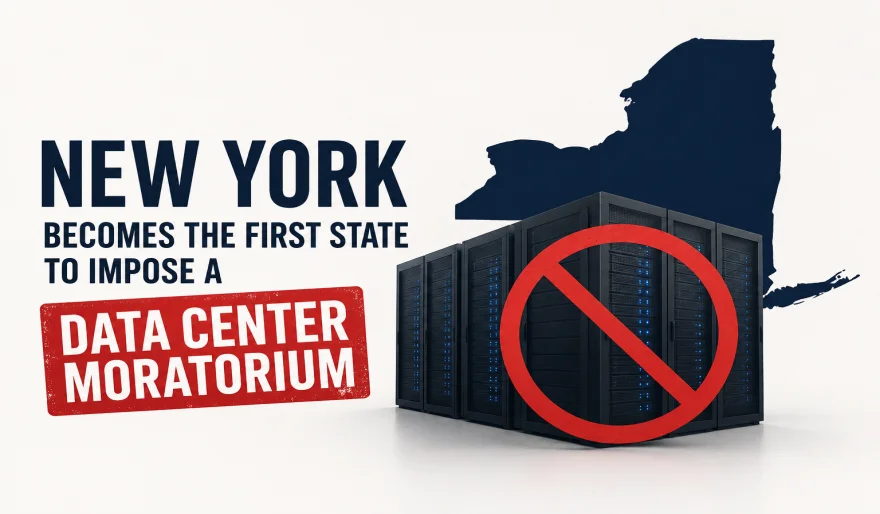
The AI industry's infrastructure boom has hit its first major roadblock.
New York has approved a temporary moratorium on the development of new large-scale data centers in parts of the state while officials study their impact on the electric grid, water resources, and local communities. The decision makes New York the first state to take such a step as AI-driven demand for computing power continues to surge.
State lawmakers say the pause is necessary because data centers are consuming unprecedented amounts of electricity, threatening grid reliability and making it harder for the state to meet its clean energy and climate goals. AI facilities, which require thousands of powerful GPUs running around the clock, have become some of the largest electricity consumers in the country.
The moratorium comes as major tech companies—including OpenAI, Microsoft, Google, Amazon, Meta, and xAI—continue investing billions of dollars into expanding AI infrastructure. However, growing concerns over energy use, water consumption, and environmental impact are prompting regulators to rethink how and where these facilities should be built.
Supporters argue the pause gives policymakers time to create rules that balance economic growth with environmental sustainability. Critics, however, warn it could push AI investments—and the jobs they create—to neighboring states with fewer restrictions.
Why it matters
New York's decision could set a precedent for other states facing similar pressure from the AI boom. If more governments introduce restrictions, AI companies may have to rethink where they build future data centers and how they power them.
The upside
- Encourages more sustainable AI infrastructure.
- Gives regulators time to modernize energy and environmental policies.
- Could accelerate investment in renewable-powered data centers.
The downside
- May delay AI infrastructure projects and investments.
- Companies could move projects to states with less regulation.
- Could slow local job creation tied to data center construction.
Bottom line: The AI race is no longer just about building bigger models—it's also about finding enough power to run them. New York's moratorium signals that governments are beginning to put limits on unchecked AI infrastructure growth, and other states may soon follow.



















 AI Agents