Stay Ahead of the Curve
Latest AI news, expert analysis, bold opinions, and key trends — delivered to your inbox.
Nvidia Unveils Rubin: The Next AI Chip Era Begins
5 min read Nvidia just unveiled Rubin, its next-gen AI chip architecture at CES. Already in full production, Rubin will replace Blackwell and is built for skyrocketing AI compute demand. Message is clear: Nvidia isn’t slowing down — it’s accelerating. January 06, 2026 11:12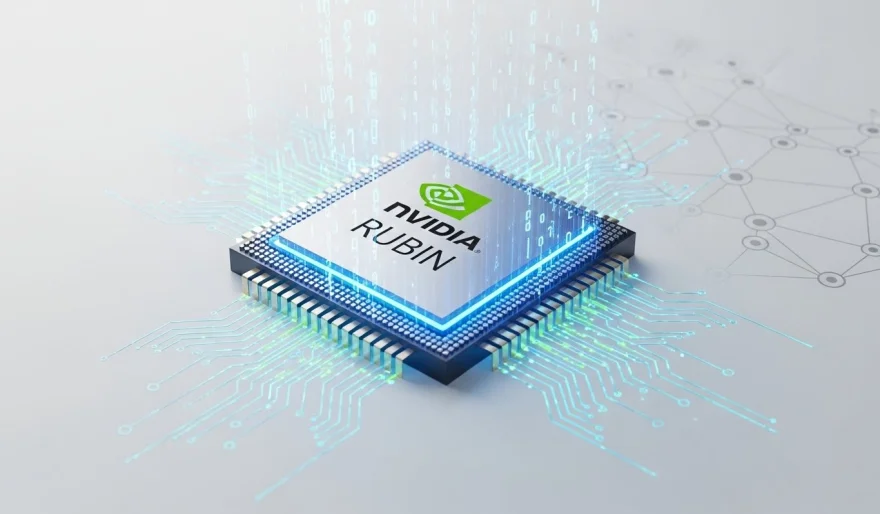
Nvidia is already moving on from Blackwell.
At CES, CEO Jensen Huang officially launched Rubin, Nvidia’s next-generation AI computing architecture — and he didn’t undersell it. According to Huang, Rubin represents the state of the art in AI hardware and is already in full production, with broader ramp-up expected in the second half of the year.
The reason? AI’s appetite for compute is exploding.
“The amount of computation necessary for AI is skyrocketing,” Huang said. “Today, I can tell you that Vera Rubin is in full production.”
Rubin was first teased back in 2024, but this is its real coming-out party — and it signals how aggressively Nvidia is staying ahead of demand.
What Rubin Actually Means
Rubin will replace Blackwell, which itself only recently replaced Hopper and Lovelace. That pace tells you everything you need to know about Nvidia’s strategy:
shorter chip cycles, faster performance jumps, and total dominance of AI infrastructure.
While Nvidia hasn’t fully disclosed Rubin’s specs yet, the messaging is clear:
-
Designed specifically for massive-scale AI workloads
-
Built for the next wave of training + inference-heavy models
-
Optimized for data centers running frontier AI systems
This isn’t about gaming GPUs anymore. Rubin exists for hyperscalers, AI labs, governments, and anyone trying to train or deploy models at absurd scale.
Why This Matters (Big Picture)
Rubin helps explain how Nvidia became the most valuable company in the world — and why it’s trying to stay there.
AI companies aren’t slowing down model training. If anything, they’re scaling faster than energy grids, data centers, and budgets can keep up with. Nvidia’s answer is simple:
Build chips that assume infinite demand.
Rubin also locks customers deeper into Nvidia’s ecosystem. Once you’re building around Blackwell, moving to Rubin is the path of least resistance — and Nvidia knows it.
Pros
-
🚀 Keeps Nvidia years ahead of rivals like AMD and custom silicon efforts
-
🧠 Built specifically for next-gen AI workloads, not retrofitted
-
🏭 Already in production — not vaporware
-
🔁 Reinforces Nvidia’s rapid, predictable upgrade cycle
Cons / Risks
-
⚡ Power consumption and infrastructure strain remain unresolved
-
💰 Costs could further concentrate AI development among Big Tech
-
🧱 Smaller AI startups may struggle to access or afford Rubin-based systems
The Quiet Signal Here
The most important line wasn’t about performance — it was “in full production.”
That’s Nvidia telling the market:
We’re not reacting to AI demand. We’re planning several moves ahead.
If Blackwell powered today’s AI boom, Rubin is clearly built for what comes after — larger models, longer training runs, and AI systems that don’t yet exist.



















 AI Agents