Stay Ahead of the Curve
Latest AI news, expert analysis, bold opinions, and key trends — delivered to your inbox.
Nvidia Wants a Piece of the $200 Billion CPU Market
3 min read Nvidia is making a major push into the $200 billion CPU market by partnering with Microsoft, Dell, HP, and other PC makers to build a new generation of AI-powered computers. The company is betting that AI agents capable of automating tasks, understanding context, and assisting users directly on their devices will drive the next PC upgrade cycle. By bringing its AI expertise beyond GPUs and into the heart of personal computing, Nvidia is positioning itself to challenge long-established CPU leaders like Intel and AMD while helping shape the future of AI-native PCs. June 02, 2026 11:50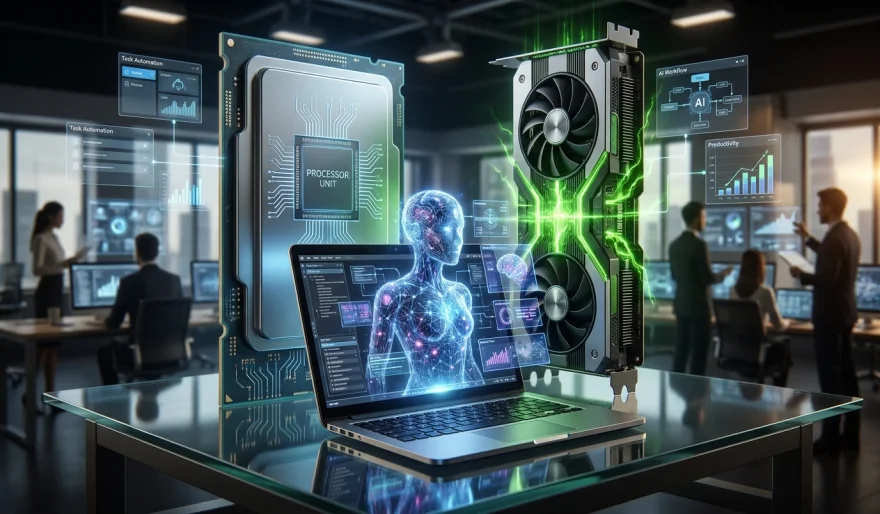
For decades, the CPU has been the undisputed brain of the PC, powering everything from spreadsheets to video games. Nvidia helped dominate the AI revolution through GPUs, but now the company is aiming at an even bigger prize: the $200 billion CPU market.
At Computex, Nvidia unveiled a new wave of AI-powered PCs built in partnership with Microsoft, Dell, HP, Lenovo, and other major manufacturers. But this isn't just another hardware launch. Nvidia's vision is a future where AI agents run directly on your computer, handling tasks, managing workflows, and acting more like digital employees than software tools.
The company believes the next generation of PCs won't simply run applications—they'll host intelligent agents capable of understanding context, automating complex tasks, and working alongside users throughout the day. To make that possible, Nvidia is combining its AI expertise with new CPU technologies and partnerships across the PC ecosystem.
What makes this move significant is the size of the opportunity. While Nvidia already dominates the AI chip market, the traditional CPU industry remains largely controlled by players like Intel and AMD. Breaking into that market would give Nvidia influence over the core computing infrastructure used by billions of people worldwide.
The timing is also strategic. Microsoft is aggressively pushing AI into Windows through Copilot and AI agents, while PC makers are searching for new reasons for consumers and businesses to upgrade aging devices. Nvidia is positioning itself at the center of that transition, betting that AI-native computers will become the next major upgrade cycle.
Why it matters:
The AI race is expanding beyond cloud data centers and chatbots. Nvidia is betting that the next battlefield is the personal computer itself. If AI agents become a standard feature of everyday computing, the company could challenge decades of CPU dominance and reshape what users expect from a PC. The question is no longer whether AI will live on your computer—it's which company will power it.



















 AI Agents