Stay Ahead of the Curve
Latest AI news, expert analysis, bold opinions, and key trends — delivered to your inbox.
OpenAI Acquires Convogo Team to Build AI for Real Work
3 min read OpenAI acqui-hires the Convogo team to help turn AI into practical tools for professionals. The move highlights a shift in the AI industry from raw model power to workflow integration and real-world impact. January 09, 2026 12:08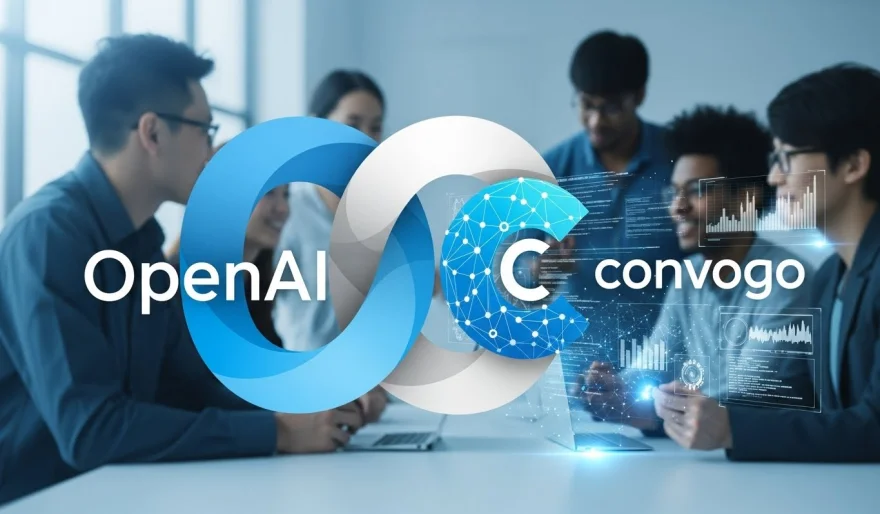
OpenAI is starting the year the same way it ended the last one: by buying talent, not products.
The company is acquiring the team behind Convogo, an executive coaching AI tool used by consultants, HR teams, and leadership coaches to automate assessments and feedback reports. OpenAI isn’t taking Convogo’s tech or IP — just the people. The three co-founders are joining OpenAI to work on its “AI cloud efforts,” and Convogo’s product is being shut down.
On the surface, this looks like a small acqui-hire. Underneath, it reveals where the AI industry is heading next.
Convogo began with a simple promise: use AI to remove the repetitive, low-value parts of coaching so humans can focus on judgment and relationships. But as the team scaled, they discovered a bigger problem — powerful models don’t automatically translate into real-world impact. The gap isn’t intelligence anymore. It’s experience design.
That insight aligns perfectly with OpenAI’s current strategy. As foundation models plateau and competitors close the gap, differentiation is shifting away from raw capability toward workflow integration, usability, and domain-specific execution. OpenAI is clearly stocking up on teams that understand how professionals actually work.
What this means for the AI industry
This move signals a broader transition across AI:
-
Model breakthroughs are no longer enough — the value is moving up the stack into products, workflows, and outcomes
-
Acqui-hires will increasingly replace flashy product launches as top labs race to absorb applied AI talent
-
Vertical AI startups may struggle to survive independently, but their teams are becoming extremely valuable
-
The winners will be companies that turn general AI into invisible infrastructure inside everyday jobs
In short, the AI arms race is evolving. The next battleground isn’t smarter models — it’s who can make AI quietly indispensable at work.
















 AI Agents