Stay Ahead of the Curve
Latest AI news, expert analysis, bold opinions, and key trends — delivered to your inbox.
OpenAI Is Betting on Earbuds for Its First AI Hardware — Launch Set for 2026
4 min read OpenAI is targeting 2026 to launch its first hardware device — likely AI-powered earbuds codenamed “Sweet Pea.” Designed to run AI tasks locally, the device aims to make ChatGPT more integrated and personal. Success isn’t guaranteed, though; past AI hardware attempts like Humane AI Pin show that convenience, utility, and OS integration are critical. January 22, 2026 09:50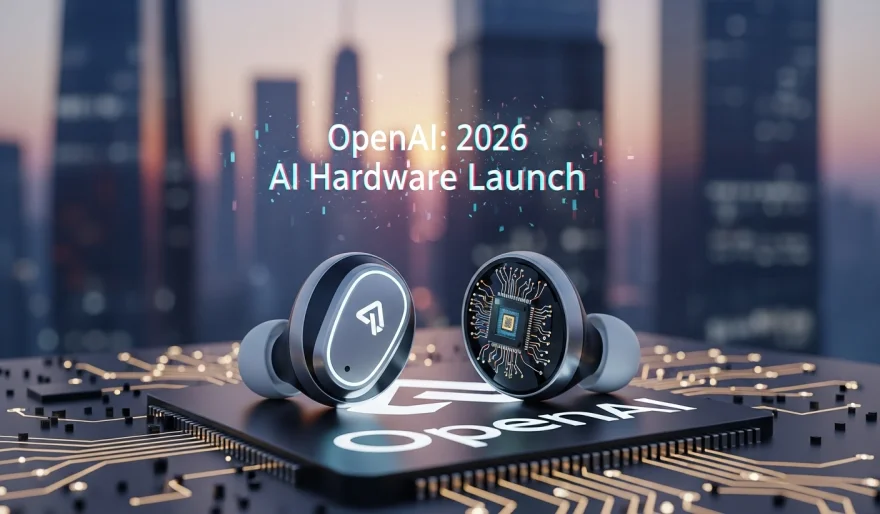
At a Davos panel hosted by Axios, OpenAI Chief Global Affairs Officer Chris Lehane confirmed the company is on track to ship its first hardware device in the second half of 2026. While OpenAI hasn’t revealed specifics, recent leaks suggest the device could be AI-powered earbuds, codenamed “Sweet Pea.”
What We Know About “Sweet Pea”
-
Design: Screen-free, pocketable, with a unique look compared to existing earbuds
-
Hardware: Might run on a custom 2-nanometer processor, enabling AI tasks locally instead of relying on the cloud
-
Scale: OpenAI reportedly aims to ship 40–50 million units in the first year
-
Manufacturing: Early talks with China-based Luxshare, but Foxconn may ultimately handle production
The device promises to make ChatGPT more integrated, more personal, and less dependent on phones or computers. Sam Altman previously described it as “peaceful and calm,” a deliberate contrast to the always-demanding nature of smartphones.
Why This Matters
Currently, OpenAI’s ChatGPT has nearly a billion weekly users, but it relies on third-party platforms for access. A proprietary device would let OpenAI:
-
Control both development and distribution
-
Release exclusive, purpose-built features
-
Explore ambient AI experiences, like voice-first interactions
In short: OpenAI could move from being just an AI service to an AI-first ecosystem player.
The Challenges
The path won’t be easy. Earbuds are already a mature market dominated by AirPods and Sony. Convincing users to replace daily essentials requires deep integration with operating systems and real utility beyond voice chat.
History also shows that AI hardware is hard to nail. Examples:
-
Humane AI Pin flopped and was sold to HP
-
Rabbit hasn’t broken out of initial hype
-
Friend AI necklace faced backlash over marketing
The lesson is clear: hype doesn’t guarantee adoption. OpenAI will need both utility and stickiness to succeed.
The Bigger Picture
The “Sweet Pea” earbuds underscore a broader trend: AI is moving from the screen to the device in your pocket or on your body. The winners won’t just make smart assistants — they’ll create AI experiences people can’t live without.
OpenAI is betting its first hardware can be more than a gadget. If successful, it could redefine what an AI companion looks like in everyday life.



















 AI Agents