Stay Ahead of the Curve
Latest AI news, expert analysis, bold opinions, and key trends — delivered to your inbox.
OpenAI Launches a macOS App for Agentic Coding
4 min read OpenAI launched a new macOS Codex app that lets AI agents help developers write code faster and work in parallel. It’s a move to compete with other AI coding tools like Claude Code and Gemini. February 03, 2026 11:09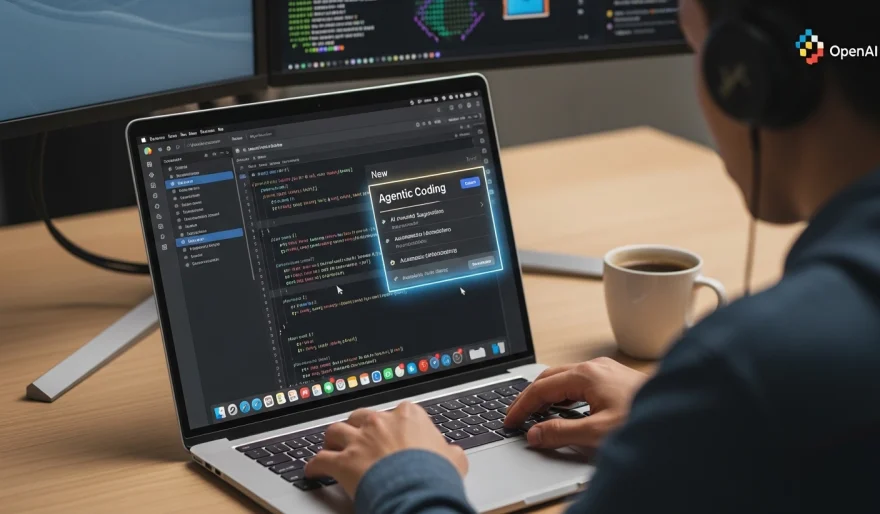
OpenAI just launched a new macOS app for Codex, its AI coding tool — a move that signals one thing: the battle for the future of software development is no longer about models alone, but about agentic workflows and developer experience.
What’s new
The Codex macOS app is built for agentic coding — where multiple AI agents can work in parallel on software tasks.
It integrates modern workflows, agent skills, and automation features that reflect how developers are increasingly collaborating with AI.
This launch comes shortly after GPT-5.2-Codex, OpenAI’s most powerful coding model yet, and is clearly aimed at competing with tools like Claude Code and other agent-based dev platforms.
Why OpenAI did this
OpenAI has had strong models, but weaker interfaces compared to rivals.
This app is its attempt to close that gap.
As Sam Altman put it, GPT-5.2 is extremely powerful — but harder to use. The new app is designed to make that power practical.
The benchmark reality check
Despite OpenAI’s confidence, the performance gap isn’t huge.
-
GPT-5.2 leads on TerminalBench (command-line tasks).
-
Gemini 3 and Claude Opus agents show comparable results.
-
SWE-bench results show no clear winner.
Translation: the AI coding race is tighter than it looks.
What makes the Codex app different
-
Multi-agent parallel workflows
-
Background automations and scheduled tasks
-
Customizable agent personalities (pragmatic, empathetic, etc.)
-
Faster end-to-end software creation
OpenAI’s bold claim?
You can build sophisticated software from scratch in just hours.
Why this matters
The real shift isn’t “AI helps you code.”
It’s “AI becomes your development team.”
Whoever wins the agentic coding platform war could define how software is built for the next decade — the same way GitHub and IDEs once did.
The hidden risk
Agentic coding is powerful, but hard to measure, control, and secure.
As AI agents gain autonomy, mistakes scale just as fast as productivity.
Bottom line
OpenAI isn’t just releasing another app.
It’s fighting for relevance in a world where developers are choosing ecosystems, not just models.
And in the AI era, the best interface might matter more than the smartest model.















 AI Agents