Stay Ahead of the Curve
Latest AI news, expert analysis, bold opinions, and key trends — delivered to your inbox.
OpenAI’s Pentagon Deal Drops — But the Questions Aren’t Going Away
3 min read OpenAI has shared more details about its agreement with the United States Department of Defense, following scrutiny over the speed of the deal. CEO Sam Altman acknowledged the negotiations were rushed and the optics “don’t look good.” March 02, 2026 14:22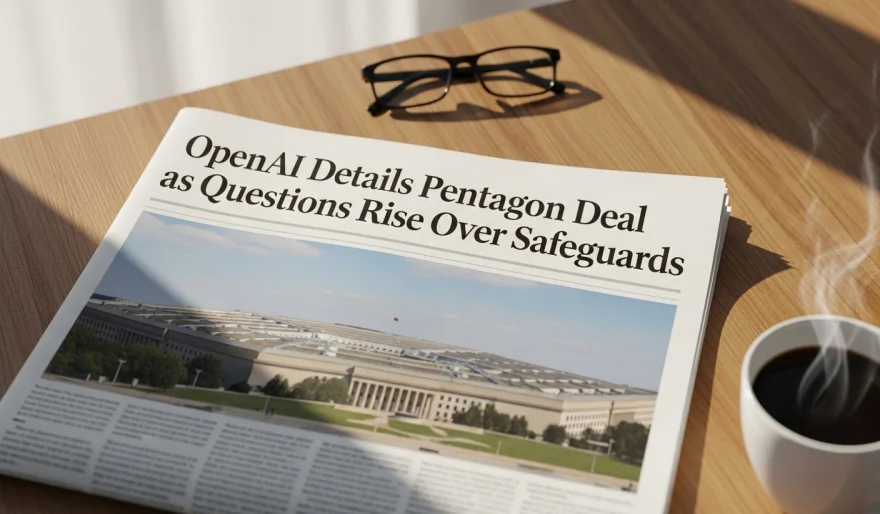
OpenAI just revealed more details about its agreement with the United States Department of Defense — and even its own CEO admits the timing wasn’t great.
Sam Altman said the deal was “definitely rushed” and acknowledged the optics “don’t look good.” That’s rare honesty in a moment this politically sensitive.
Here’s the context: after negotiations between Anthropic and the Pentagon reportedly fell through, the U.S. government moved to label Anthropic a supply-chain risk. Shortly after, OpenAI announced it had secured its own agreement to deploy models in classified environments.
That triggered the obvious debate:
Are OpenAI’s safeguards real — or just PR?
And why was OpenAI able to move forward when others couldn’t?
In a new blog post, OpenAI outlined strict red lines. Its models cannot be used for mass domestic surveillance, autonomous weapons, or high-stakes automated decisions (like “social credit” systems). The company says it protects these limits through a multi-layered approach — retaining control of its safety stack, deploying via secure cloud infrastructure, involving cleared personnel, and relying on contractual protections alongside U.S. law.
The bigger story? AI companies are no longer just competing on performance. They’re competing on trust, governance, and government readiness.
Hot take: As frontier AI becomes embedded in national security, the real differentiator won’t just be who builds the smartest model — it’ll be who can pass the strictest political and operational scrutiny without slowing down innovation.


















 AI Agents