Stay Ahead of the Curve
Latest AI news, expert analysis, bold opinions, and key trends — delivered to your inbox.
Oracle and OpenAI Reportedly Drop Texas Data Center Expansion Plan
5 min read Oracle and OpenAI have reportedly scrapped plans to expand a data center project in Texas, according to Bloomberg News. The decision highlights growing caution around large-scale AI infrastructure investments, as companies balance compute demands, regulatory considerations, and rising operational costs in the rapidly evolving artificial intelligence landscape. March 07, 2026 08:15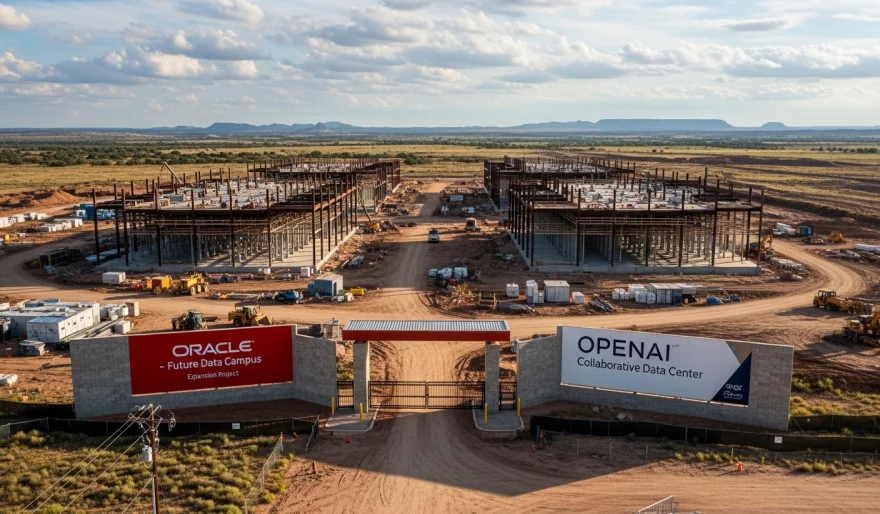
Oracle and OpenAI have reportedly dropped plans to expand a new data center in Texas, according to Bloomberg News.
On paper, it sounds like a minor infrastructure tweak. In reality, it signals how cautious AI and cloud giants are becoming around rapid scaling, regulation, and costs.
Why This Matters
Data centers are the backbone of AI. Every GPT model query, every training run, every enterprise API call depends on massive compute infrastructure.
Stopping or delaying a major expansion shows:
-
The AI compute boom is hitting practical limits.
-
Companies are weighing political, regulatory, and operational risks before committing billions to physical infrastructure.
-
Even AI leaders like OpenAI are sensitive to long-term cost and geopolitical exposure.
The Context
Texas has been pitched as a hub for cloud and AI infrastructure because of cheap electricity, favorable regulations, and land availability. But:
-
Energy volatility is rising — AI compute is incredibly power-hungry.
-
Local politics and tax incentives are under scrutiny.
-
Corporate caution is increasing after high-profile AI failures and regulatory pressure.
So it’s not just a canceled data center — it’s a signal that AI infrastructure expansion isn’t guaranteed to be smooth or cheap.
The Pros of This Move
1. Cost discipline
AI compute is expensive; scaling too fast risks runaway expenses.
2. Regulatory safety
Avoids potential friction with state and federal oversight.
3. Strategic focus
Companies can focus on efficiency, optimization, and cloud partnerships rather than overbuilding physical infrastructure.
The Risks / What Could Go Wrong
1. Capacity bottlenecks
Limited expansion could slow AI deployment or enterprise adoption.
2. Competitive disadvantage
Other companies building aggressively elsewhere may gain a compute edge.
3. Investor pressure
OpenAI and Oracle are under market scrutiny; delaying projects could raise eyebrows.
4. Political signaling
Pulling back in a high-profile state could be read as caution in U.S. AI policy environments.
Big Picture Take
This isn’t just about a data center in Texas.
It shows that AI growth is colliding with real-world constraints:
-
Power availability
-
Construction costs
-
Regulatory risk
-
Geopolitics
Even the most well-funded AI companies now have to balance ambition with pragmatism.
The AI race isn’t just about who has the best model — it’s about who can sustainably scale compute infrastructure without triggering cost, legal, or political crises.
And this Texas pullback might just be the start of a more cautious infrastructure phase across the U.S. AI landscape.



















 AI Agents