Stay Ahead of the Curve
Latest AI news, expert analysis, bold opinions, and key trends — delivered to your inbox.
Samsung Just Rode the AI Wave to an 8x Profit Explosion
4 min read Samsung reported an expected 8x jump in quarterly profit, fueled by surging demand and rising prices for AI memory chips. As AI data centers scale, memory has become a key bottleneck—turning chipmakers into major profit drivers and signaling that the real money in AI may be shifting toward infrastructure, not just models. April 07, 2026 12:27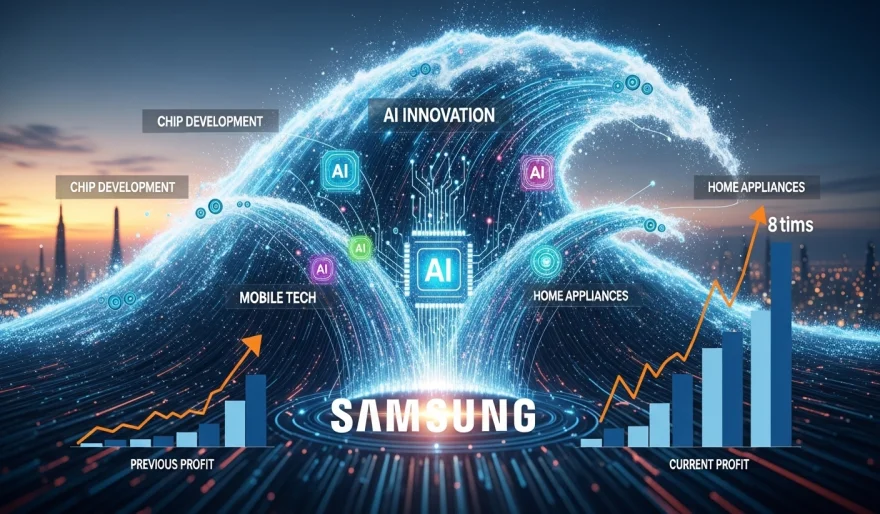
The AI boom isn’t just lifting startups—it’s supercharging the companies powering it.
Samsung Electronics just flagged an eightfold jump in quarterly profit, driven by one thing: exploding demand for AI chips.
What’s really happening
Samsung expects to post around ₩57.2 trillion ($37B+) in operating profit for Q1 2026—more than 8x last year’s numbers and far above analyst expectations.
The driver?
👉 AI data centers are buying memory chips faster than supply can keep up
That imbalance is doing two things at once:
- Pushing chip prices up sharply (DRAM prices alone could jump 50%+)
- Turning memory into the most profitable layer of AI infrastructure
Even more interesting: this isn’t just high-end chips.
Traditional memory used in everyday systems is also being squeezed as AI demand eats into supply.
Why this matters
We’re seeing a clear shift in where AI value is being captured:
- Models get the hype
- Chips get the margins
Samsung’s surge shows that memory—especially high-bandwidth memory (HBM)—has become a critical bottleneck for AI systems.
And when something becomes a bottleneck in tech…
👉 prices go up
👉 profits follow
The bigger picture
This is part of a broader AI infrastructure supercycle:
- Cloud giants are scaling data centers aggressively
- AI models are getting bigger and more compute-hungry
- Every upgrade requires more advanced memory
Samsung, alongside rivals, is now racing to supply these chips—especially to companies like Nvidia building AI hardware.
The subtle risk
But there are early cracks forming:
- Some demand is already struggling to keep up with rising prices
- New efficiency breakthroughs (like memory-saving AI techniques) could reduce future demand
- Geopolitical tensions and energy costs could disrupt supply chains
In other words:
👉 This boom is powerful—but not guaranteed to stay this hot forever
The bigger trend (hot take)
We’re entering the “AI hardware pricing era.”
Not just:
- Who builds the best AI
But:
- Who controls the components AI can’t run without
And right now, memory makers like Samsung are quietly becoming some of the biggest winners in the entire AI stack.



















 AI Agents