Stay Ahead of the Curve
Latest AI news, expert analysis, bold opinions, and key trends — delivered to your inbox.
Sika Bets on China’s Renovation Boom and Global Data Centre Surge for Growth
5 min read Sika is targeting growth through China’s rising renovation market and the global boom in data centre construction. The strategy highlights how AI-driven infrastructure demand and urban renewal trends are reshaping traditional construction industries, creating both steady growth opportunities and exposure to economic and geopolitical risks. June 05, 2026 12:09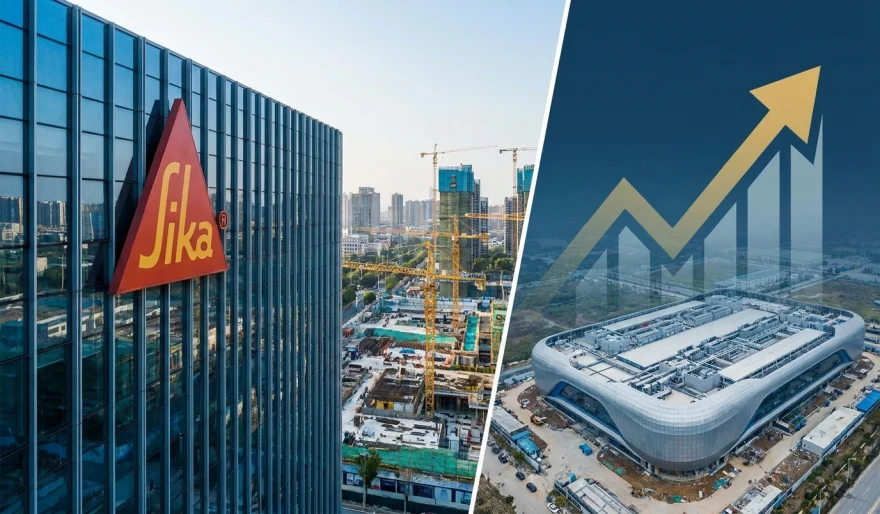
Swiss construction chemicals giant Sika is sharpening its focus on two powerful growth engines: China’s expanding renovation market and the global explosion in data centre construction, as it looks to strengthen revenues amid shifting global construction trends.
At first glance, the two markets may seem unrelated—but together they reflect a deeper transformation in how the world builds. On one side is China, where the construction boom of previous decades is giving way to a massive wave of renovation, refurbishment, and urban renewal. On the other is the digital economy, where artificial intelligence, cloud computing, and streaming are fueling unprecedented demand for data centres.
Sika, known for its adhesives, sealants, waterproofing, and specialty construction materials, is positioning itself right in the middle of both shifts.
In China, the focus is moving away from building new cities and toward upgrading existing infrastructure—residential buildings, commercial spaces, and industrial facilities. That shift creates steady, long-term demand for renovation materials rather than one-off construction spikes.
Globally, data centres are becoming one of the fastest-growing construction segments. Every AI model training run, cloud storage system, or streaming platform depends on highly specialized facilities that require advanced cooling, insulation, fire protection, and durable construction materials—areas where Sika has a strong foothold.
Why this matters
This is not just a company growth story—it reflects how global infrastructure priorities are changing. As AI and digital services expand, physical construction is quietly being reshaped to support them. Companies like Sika sit at the intersection of old-world infrastructure and new-world digital demand.
For investors, it signals a shift toward “invisible infrastructure” plays—firms that don’t build flashy tech products but enable the backbone of the digital economy. For industries, it highlights how AI growth is no longer just a software story; it’s becoming a concrete, steel, and materials story too.
Pros and Cons
On the upside, Sika benefits from highly durable demand streams. Renovation projects in China tend to be long-term and less cyclical than new construction, while data centre growth is being accelerated by AI adoption, cloud expansion, and global data consumption.
There’s also diversification at play—China provides steady urban renewal demand, while global data centres offer exposure to fast-growing tech infrastructure markets.
But there are risks. China’s property sector remains under pressure, and renovation spending can be influenced by broader economic weakness or policy shifts. In data centres, competition is intense, and any slowdown in AI infrastructure investment could ripple through demand. Geopolitical tensions and supply chain constraints also remain persistent overhangs.
The bigger picture
Sika’s strategy reflects a broader reality: the next phase of growth in global infrastructure won’t just be about building more—it will be about upgrading, optimizing, and powering a digital-first world.
As AI scales globally, even traditional construction materials companies are being pulled into the orbit of the tech economy.



















 AI Agents