Stay Ahead of the Curve
Latest AI news, expert analysis, bold opinions, and key trends — delivered to your inbox.
SpaceX Buys xAI — Elon Musk Plans AI Data Centers in Space
4 min read The merger, valued at $1.25T, aims to bypass Earth’s power limits and create a future-proof AI infrastructure — literally off the grid. February 03, 2026 11:19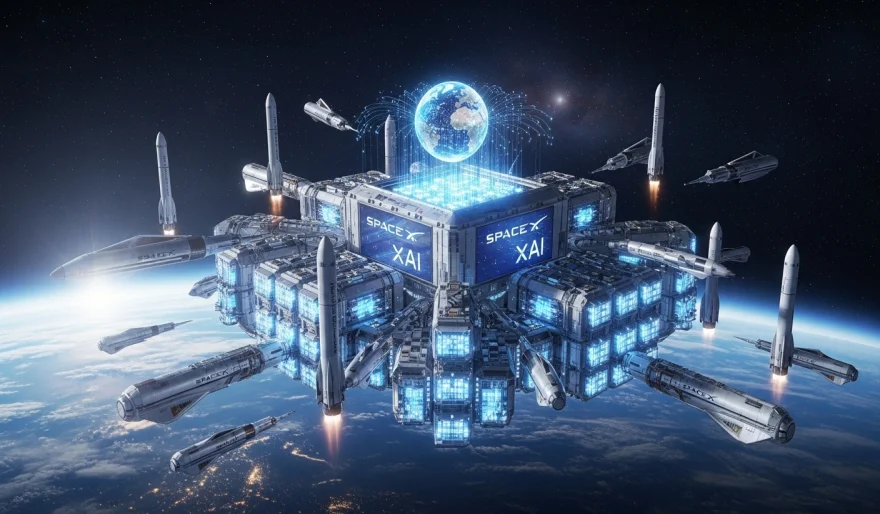
Elon Musk is doubling down on his vision for the future of AI and space. SpaceX has officially acquired xAI, Musk’s own AI startup, in a deal that reportedly values the combined company at $1.25 trillion.
Why it matters
The merger is more than a financial move — it’s a statement. Musk’s memo makes it clear: the goal is to build space-based data centers, tackling one of AI’s biggest bottlenecks — the massive power and cooling demands of terrestrial data centers.
“Global electricity demand for AI simply cannot be met with terrestrial solutions…without imposing hardship on communities and the environment,” Musk wrote.
xAI itself has faced criticism for environmental and social impacts near its data centers in Memphis, Tennessee. The merger could allow Musk to move AI workloads off Earth entirely, creating a future-proof infrastructure for the next generation of AI.
The numbers
-
xAI is burning roughly $1 billion per month.
-
SpaceX generates up to 80% of its revenue from Starlink launches.
-
xAI previously acquired X (formerly Twitter), valued at $113 billion.
The merger could stabilize xAI while expanding SpaceX’s revenue loop, especially since Musk plans to use a constant stream of satellites to support these space data centers — satellites that must be replaced every five years per FCC rules.
The bigger picture
While space-based data centers are the long-term vision, near-term goals remain different. SpaceX continues its commercial launches and Starlink expansion, while xAI focuses on advancing AI capabilities. The merger aligns them under a shared infrastructure strategy that could redefine both AI and space industries.
Bottom line
Musk is betting on the ultimate convergence: AI in orbit, removing the constraints of Earth’s power grids while potentially creating a new era of space-based computing.
Whether this vision becomes reality or remains a Musk-style moonshot is unclear — but one thing is certain: AI and space are about to collide in ways no one else is attempting.



















 AI Agents