Stay Ahead of the Curve
Latest AI news, expert analysis, bold opinions, and key trends — delivered to your inbox.
SpaceX Isn’t Done — After Space, It’s Coming for AI
3 min read SpaceX is expanding beyond space into artificial intelligence, leveraging its massive infrastructure and real-world data from satellites and global networks. Backed by Elon Musk’s broader AI ambitions, the company could become a major player by combining physical systems with AI — positioning itself not just as a space leader, but as a key force in the future of AI infrastructure. April 23, 2026 11:04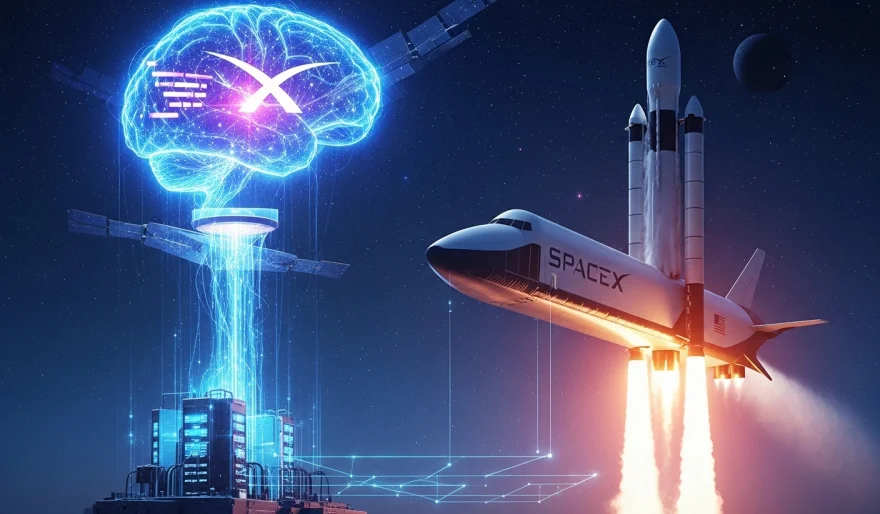
After dominating the private space race, SpaceX is quietly shifting focus toward a much bigger frontier: artificial intelligence. Sources suggest the company is exploring deeper AI integration across its operations — from satellite networks to autonomous systems — and potentially positioning itself as a serious player in the AI infrastructure race. With Elon Musk already deeply involved in AI through ventures like xAI, this move signals a broader strategy: owning not just space, but the intelligence layer powering it.
What makes this interesting is where SpaceX sits. It already controls massive real-world data pipelines through Starlink, rocket telemetry, and global communications infrastructure. That’s the exact kind of high-quality, real-time data AI systems crave.
Why it matters:
This isn’t just another company “getting into AI.” It’s a power shift.
SpaceX has three unfair advantages most AI startups don’t:
- Infrastructure control (satellites, launch systems, global connectivity)
- Proprietary data at scale (real-time, physical-world data)
- Capital + ambition to play long-term
If SpaceX leans fully into AI, it could blur the line between physical infrastructure and intelligence systems — think autonomous satellite networks, self-optimizing space logistics, or even AI-managed global internet coverage.
The bigger picture: AI isn’t just a software game anymore. It’s becoming an infrastructure war — and SpaceX might be one of the few companies positioned to own both layers.
Hot take:
While everyone is building AI models, SpaceX may be building the environment those models depend on. And that’s a much harder position to compete against.



















 AI Agents