Stay Ahead of the Curve

Latest AI news, expert analysis, bold opinions, and key trends — delivered to your inbox.

SpaceX’s Rumored AI Device Sounds a Lot Like a Smartphone—But Musk Says It Isn’t Real

5 min read Reports claim SpaceX showed investors a prototype of an AI-powered, handset-like device ahead of its IPO, but Elon Musk has publicly denied the story. July 02, 2026 15:35 SpaceX’s Rumored AI Device Sounds a Lot Like a Smartphone—But Musk Says It Isn’t Real
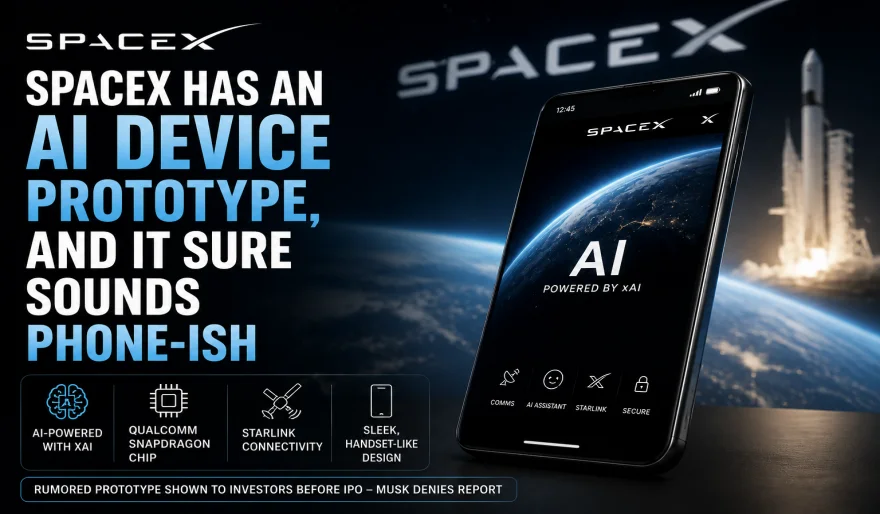
Just as the AI hardware race is heating up, SpaceX has found itself at the center of fresh speculation.

According to a report from The Wall Street Journal, SpaceX privately demonstrated a prototype of a sleek, AI-powered "handset-like" device to investors before its public offering. The reported prototype was said to be thinner than an iPhone, powered by a Qualcomm Snapdragon chip, run a proprietary operating system, and deeply integrate AI technology from xAI.

If accurate, the device would place SpaceX alongside companies like OpenAI, Meta, and Apple, all of which are exploring a future where AI moves beyond apps and into dedicated hardware. The idea appears to be creating an AI-first device that isn't limited by Android or iOS, giving users a more native, always-on AI experience.

But the story took an immediate twist.

Shortly after the reports surfaced, Elon Musk responded on X, calling them "utterly false." That leaves the existence of the device—and whether it was ever shown to investors—very much in dispute.

Even if the reported prototype never existed, the speculation reflects a broader shift across the AI industry. OpenAI is building AI hardware with former Apple design chief Jony Ive, Meta is doubling down on AI wearables, and Apple is expected to make AI central to future devices. SpaceX's rumored project would fit into that growing race to define what comes after the smartphone.

Why it matters

The next AI battle may not be over chatbots—it could be over who builds the device you interact with AI through every day.

Whether that's a phone, glasses, earbuds, or something entirely new, every major AI company is searching for the next hardware platform.

The upside

  • An AI-first device could offer deeper integration than today's smartphone apps.
  • Combining xAI with Starlink could enable unique always-connected AI experiences.
  • It would give SpaceX greater control over both hardware and software.

The downside

Nothing has been officially announced, and Musk's denial means the reported prototype may never have existed. Even if it did, recent AI hardware products like Humane's AI Pin and Rabbit R1 have struggled to convince consumers that they need another device.

The takeaway

Regardless of whether this particular report is accurate, one thing is becoming increasingly clear: the race to build the next generation of AI hardware is accelerating. The biggest question isn't whether AI will leave the smartphone—it's who will define what comes next.

User Comments (0)

Add Comment
We'll never share your email with anyone else.

img