Stay Ahead of the Curve
Latest AI news, expert analysis, bold opinions, and key trends — delivered to your inbox.
Spanish Feminist Targeted by AI Fakes Demands Stricter Online Regulation
4 min read A Spanish women’s rights activist who was the victim of AI-generated fake nude images is calling for tougher online rules, arguing that current proposals don’t go far enough to protect citizens from digital abuse and deepfake harms. Her demands highlight broader European debates over regulating social media platforms, anonymous accounts, and accountability in the age of AI-driven content manipulation. February 27, 2026 16:36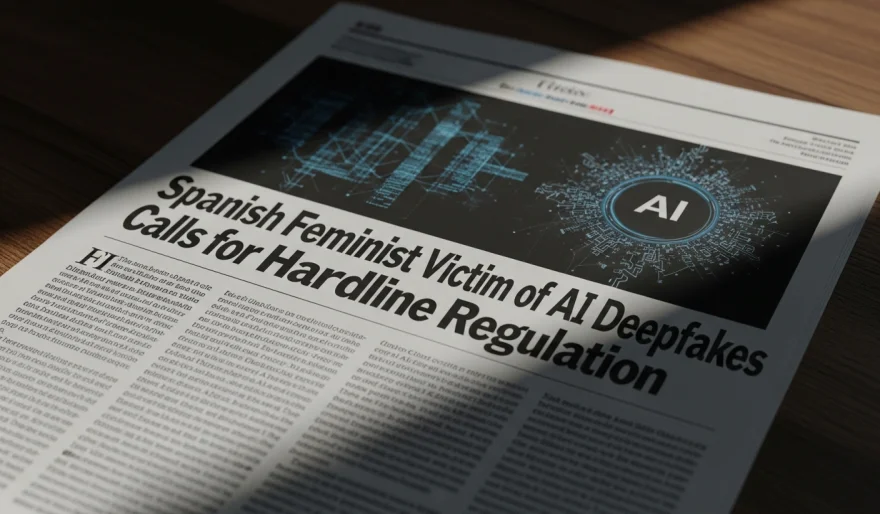
A prominent Spanish feminist activist, Carla Galeote, is intensifying calls for stricter online regulation after she was targeted with AI-generated fake nude images and faced ongoing digital abuse — experiences she says expose serious gaps in current laws and enforcement.
At just 25, Galeote combines legal expertise with a strong online presence advocating for women’s rights. But she says what she encountered online wasn’t just harassment — it was a form of digital violence enabled by AI that existing regulations struggle to address.
Why She Says Current Laws Fall Short
Spain’s government has recently moved toward regulating social media and AI-generated content, including proposals to:
-
Ban under-16s from accessing social platforms
-
Hold platform executives criminally liable if illegal or hateful content isn’t removed
-
Mandate age verification and enforce better content consent rules
But Galeote argues these steps aren’t enough.
Her key demands:
-
Traceable identities behind all online accounts — to end impunity for digital violence
-
Protection that applies to all users, not just minors
-
Stronger accountability mechanisms for platforms that repeatedly allow harmful AI content
She slammed under-16 bans as “paternalistic,” saying adults are just as vulnerable to deepfake abuse and deserve robust protections too.
The Bigger European Context
Her stance comes amid a wider European momentum to regulate AI-driven harms. Governments from France to Poland are debating similar measures, and the European Union aims to require member states to criminalize non-consensual sexual deepfakes by 2027.
Spain has also previously approved draft legislation targeting AI deepfakes and tightening consent rules on image use, showing the issue is gaining political traction.
The Core Tension: Protection vs. Free Expression
Critics of stringent regulation, including some tech executives, argue new rules could threaten free speech. Galeote disagrees, saying freedom of expression and safety online can coexist — but only if platforms are held accountable and harmful anonymity is limited.
Her case underscores a growing reality in the digital age: as AI content tools proliferate, lawmakers are scrambling to catch up, and victims of AI abuse are demanding that legal protections actually reflect the scale of harm people experience online.


















 AI Agents