Stay Ahead of the Curve
Latest AI news, expert analysis, bold opinions, and key trends — delivered to your inbox.
Spotify’s New AI Lets You Talk Your Way to the Perfect Playlist
5 min read Spotify has launched Prompted Playlist, an AI feature that lets Premium users describe the music they want in natural language. It’s a shift from passive recommendations to conversational, user-guided discovery — and a smart retention play in a crowded streaming market. January 23, 2026 13:00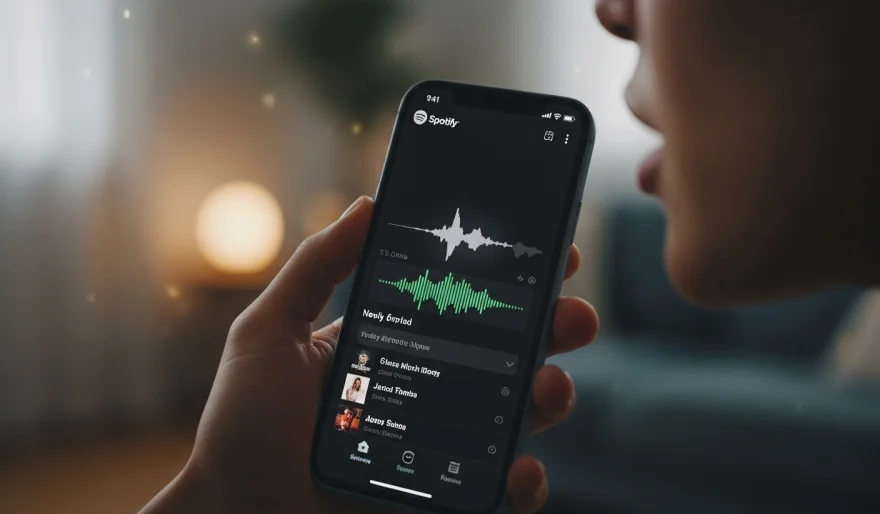
Spotify is rolling out a new AI feature called Prompted Playlist for Premium users in the US and Canada, and it’s a subtle but important shift in how music discovery works.
Instead of picking a genre, mood, or curated playlist, users can now type a prompt in plain language — something like “late-night drive music with soft rap and moody R&B” — and Spotify’s AI builds a playlist around that request.
Think ChatGPT, but for your listening habits.
The feature was previously tested in smaller markets, and its expansion signals Spotify’s growing confidence that conversational AI belongs at the center of music discovery, not just behind the scenes.
What’s actually new here?
Spotify has always been good at recommendations. What’s changing is control.
Prompted Playlist lets users:
-
Describe exactly what they want to hear, in their own words
-
Mix vibes, eras, emotions, and activities in one prompt
-
Regenerate or refine playlists by tweaking the prompt
-
Let playlists refresh over time as tastes (and moods) change
Behind the scenes, Spotify combines the prompt with your listening history and broader music trends to generate something that feels personal — not generic.
This is less “Spotify knows you” and more “Spotify listens to you.”
Why this matters
This move is about retention, not novelty.
Music streaming is a mature market. Growth doesn’t come from more songs — it comes from better experiences. By making playlist creation feel interactive, Spotify gives Premium users a reason to stay paying.
It also nudges users from passive consumption to active curation, without requiring them to manually build playlists track by track.
And strategically, it creates distance between Spotify’s paid tier and its free tier — something every subscription platform is under pressure to do right now.
The bigger AI signal
Zoom out, and this fits a larger pattern across AI products:
-
Interfaces are becoming conversational
-
Users expect systems to understand intent, not just inputs
-
Personalization is shifting from “algorithm decides” to “human guides”
Spotify isn’t trying to replace human taste — it’s trying to amplify it with language.
Pros and cons
Pros
-
🎧 Deeper personalization without extra effort
-
🧠 Discovery feels intentional, not random
-
💎 Stronger Premium value proposition
-
🗣️ Natural language lowers friction for users
Cons
-
🎵 Still limited by licensing and catalog biases
-
🤖 Prompts can overfit and narrow discovery if users aren’t careful
-
📊 Raises questions about how much influence AI has on what breaks next
The quiet takeaway
Spotify isn’t just recommending music anymore — it’s co-creating playlists with users.
That might sound small, but it’s a meaningful shift: AI moves from curator to collaborator.
And in a world where every platform is fighting for attention, letting users talk their way to the perfect playlist might be one of Spotify’s smartest moves yet.













 AI Agents