But it could be an early glimpse of what AI-native streaming eventually becomes.
Stay Ahead of the Curve
Latest AI news, expert analysis, bold opinions, and key trends — delivered to your inbox.
Streaming is quietly entering its AI era
8 min read Peacock is reimagining its streaming app with AI-powered video feeds, vertical sports, and mobile gaming. The platform’s new “Your Bravoverse” feature turns thousands of hours of Bravo content—like The Real Housewives—into personalized short clips narrated by an AI avatar of Andy Cohen, signaling a shift toward mobile-first, algorithm-driven entertainment. March 13, 2026 15:38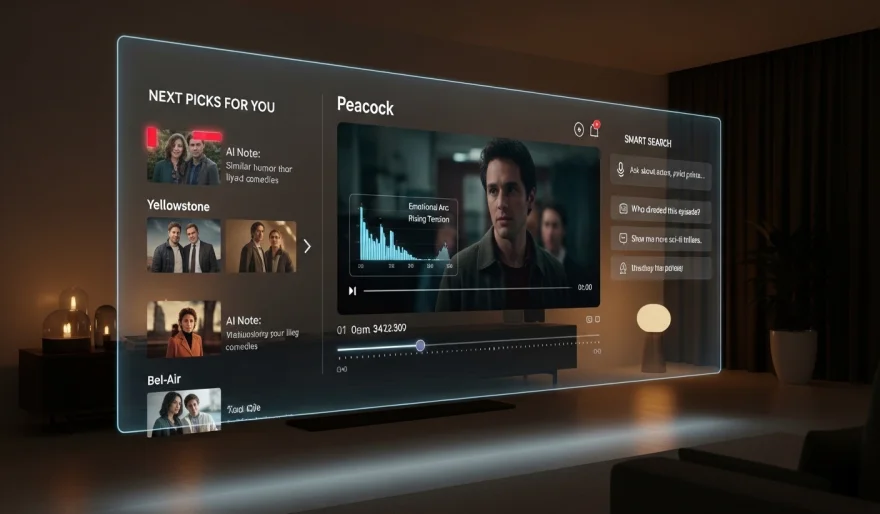
At a press event this week, the NBCUniversal streamer revealed a wave of new features built around AI-driven video discovery, vertical mobile viewing, and casual gaming. The goal is clear: transform the streaming app from a traditional TV interface into something that feels closer to a social media feed designed for entertainment.
In other words, less Netflix-style browsing… and more TikTok-style discovery.
AI Turns Bravo Into a Personalized Universe
The centerpiece of Peacock’s announcement is a new feature called “Your Bravoverse.”
The experience is designed around the network’s massive Bravo reality catalog — including franchises like The Real Housewives and Vanderpump Rules — which together represent thousands of hours of highly bingeable reality TV.
Instead of scrolling through seasons and episodes, users will get an AI-generated feed of short clips pulled from over 5,000 hours of Bravo content.
Guiding viewers through it all is a generative AI avatar of Andy Cohen, the longtime reunion host and one of the most recognizable faces in the Bravo universe. The avatar introduces moments, connects storylines across different shows, and recommends new content based on what the viewer likes.
The system itself is doing quite a bit behind the scenes.
Peacock says it uses computer vision to analyze footage and identify key storylines, characters, and moments. On top of that, AI models trained on fan behavior determine what types of scenes resonate most with viewers. Those clips are then stitched together dynamically into a personalized stream.
The math gets wild quickly: Peacock claims the system can generate more than 600 billion possible viewing variations.
Streaming Is Becoming a Mobile Feed
The Bravoverse feature is only one part of a broader strategy.
Peacock is also experimenting with vertical live sports, including mobile-first broadcasts of National Basketball Association games designed specifically for phone screens.
That’s a major shift in thinking. Traditionally, sports broadcasts are built for televisions. Vertical formats suggest streaming platforms are starting to design experiences for how younger viewers actually consume content: on their phones, often one hand scrolling.
Peacock is also testing mobile games inside the streaming app, turning the platform into something closer to an entertainment hub rather than just a place to watch shows.
Why This Matters
For years, streaming platforms have struggled with the same problem: discovery.
Most services have enormous libraries, but viewers often spend more time searching than watching. AI could fundamentally change that by turning static catalogs into dynamic feeds that constantly surface new content.
In many ways, Peacock’s approach borrows directly from the playbook of platforms like TikTok — using algorithms to surface bite-sized content that keeps users engaged for longer sessions.
If it works, streaming may start to look less like a digital cable box and more like an endless personalized entertainment feed.
The Upside
There are clear advantages to this approach.
AI-powered discovery could dramatically reduce decision fatigue, one of the biggest complaints among streaming users. Instead of choosing what to watch, viewers simply enter a feed that adapts to their preferences.
It also unlocks new life for massive content libraries. Reality franchises like The Real Housewives have years of interconnected storylines, which makes them perfect for AI-driven clip remixing.
And from a business perspective, keeping users engaged in shorter, mobile-friendly formats could increase watch time and ad revenue.
The Trade-Offs
But the strategy also raises a few questions.
First is the risk of turning streaming into another algorithm-driven attention machine. Platforms like TikTok are designed to keep users scrolling endlessly — something critics argue encourages passive consumption rather than intentional viewing.
Second, AI-curated clips could fragment storytelling. Reality TV already thrives on dramatic moments, but constantly surfacing highlights might discourage viewers from watching full episodes.
And there’s the broader concern about AI-generated hosts and avatars. While the digital version of Andy Cohen is meant to enhance the fan experience, it also hints at a future where networks rely more heavily on synthetic personalities.
The Bigger Picture
Peacock’s experiment reflects a larger shift happening across the media industry.
Streaming platforms are no longer just competing with each other. They’re competing with social media, gaming platforms, and short-form video apps for the same finite attention.
The result is a new kind of platform — one that blends AI curation, interactive content, gaming, and live entertainment into a single mobile-first experience.
Peacock’s Bravoverse may look like a niche feature today.
User Comments (0)
No comments added yet.
Comments will not be approved to be posted if they are SPAM, abusive, off-topic, use profanity, contain a personal attack, or promote hate of any kind.










 AI Agents