Stay Ahead of the Curve
Latest AI news, expert analysis, bold opinions, and key trends — delivered to your inbox.
Why the best AI investment might be in energy tech
5 min read AI investment is shifting beneath the surface. While billions still flow into models and chips, a growing constraint—energy—is quietly becoming the most valuable layer of the stack. Data center delays, power shortages, and rising demand are turning energy tech into the next big AI opportunity. March 20, 2026 14:10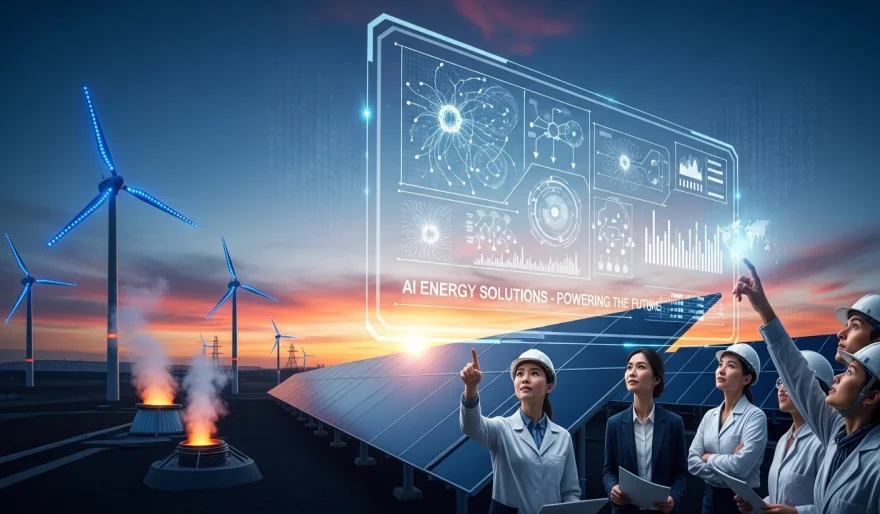
For the past five years, AI has been a gold rush. Venture capitalists have poured over $500 billion into startups chasing smarter models, faster chips, and bigger platforms.
But a new reality is setting in: AI doesn’t just run on code—it runs on electricity.
According to a report by Sightline Climate, up to half of planned data center projects could face delays. The reason isn’t funding or demand—it’s power.
Out of roughly 190 gigawatts of data center capacity being tracked, only 5 gigawatts are currently under construction. Even more telling, a significant portion of projects saw their timelines slip in 2025, highlighting a growing mismatch between AI ambition and energy availability.
This is where the narrative shifts.
While everyone is focused on AI models, the real constraint—and opportunity—is infrastructure. If data centers can’t get enough power, AI growth slows. And that bottleneck is already starting to ripple outward, potentially affecting enterprises and businesses building on top of AI.
Big Tech sees it coming.
Companies like Google and Meta are no longer just investing in AI—they’re investing in the energy that powers it. From solar and wind to nuclear projects, they’re securing their own electricity pipelines while backing next-gen solutions like long-duration battery storage.
One example is Form Energy, which is building 100-hour batteries designed to stabilize renewable energy and make it viable for constant AI workloads.
At the startup level, the race is even more focused. Companies like Amperesand, DG Matrix, and Heron Power are working on improving how power is converted and delivered. Others like Camus, GridBeyond, and Texture are building software to manage electricity flow more intelligently.
Zoom out, and the picture becomes clear.
AI demand is accelerating faster than the grid can keep up. According to Goldman Sachs, data center power consumption could surge by 175% by 2030. That’s not a marginal increase—that’s a structural shift.
Why this matters
The AI boom is entering its second phase. The first was about intelligence—models, chips, and capabilities. The next phase is about infrastructure—power, cooling, and physical systems.
And right now, energy is the choke point.
The subtle risk
If power constraints persist, AI progress may not slow evenly. Big Tech, with deep pockets and direct energy investments, will keep scaling. Smaller players? They could get squeezed out—not by lack of innovation, but by lack of electricity.
The opportunity
Energy is becoming AI’s hidden layer. The picks-and-shovels play is no longer just GPUs—it’s grids, batteries, and power optimization.
The takeaway
The smartest AI investment might not be in the next breakthrough model.
It might be in the electricity that makes all of them possible.


















 AI Agents