Stay Ahead of the Curve
Latest AI news, expert analysis, bold opinions, and key trends — delivered to your inbox.
'The Odyssey' Director Christopher Nolan Warns on AI
3 min read The Odyssey director Christopher Nolan says AI could become an "obvious Trojan horse" for the film industry, warning that while the technology has useful applications, it should never replace human creativity. July 20, 2026 11:50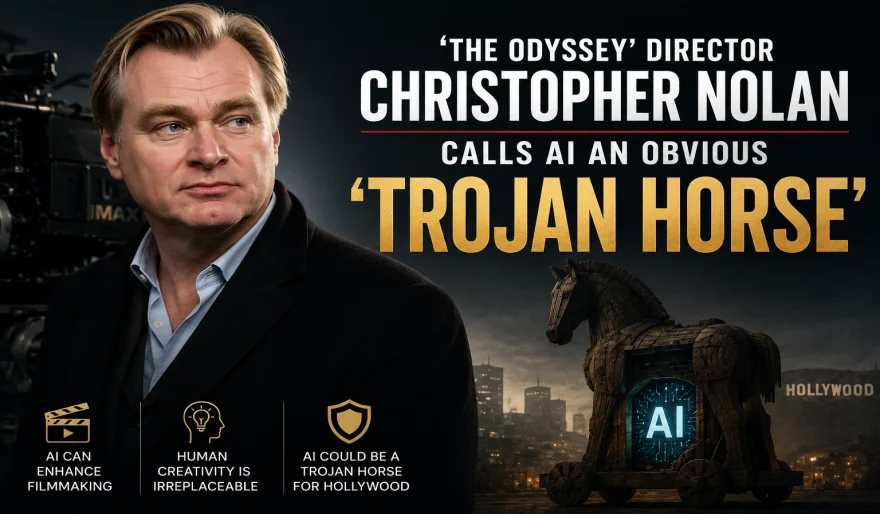
As artificial intelligence becomes more deeply embedded in Hollywood, Christopher Nolan is urging the industry to proceed with caution.
While promoting The Odyssey, the Oscar-winning director described AI as an "obvious Trojan horse"—a technology that appears beneficial on the surface but could fundamentally reshape filmmaking in unintended ways if embraced without scrutiny.
Nolan acknowledged that AI has practical uses, particularly for technical and imaging tasks. However, he rejected the idea that machines can replace human artists, calling that notion "nonsense." He also pointed to growing skepticism among younger audiences, who increasingly dismiss AI-generated content as "AI slop," suggesting authenticity is becoming more valuable in entertainment.
His comments come as major studios—including Netflix, Disney, and others—accelerate investment in generative AI tools for production, editing, and visual effects, reigniting debates over creativity, copyright, and jobs across the entertainment industry.
Why It Matters
Nolan's warning reflects a broader tension in Hollywood: AI can streamline production, but many filmmakers worry that relying too heavily on it could erode the human storytelling that audiences value most.
The Upside
AI can speed up visual effects, improve post-production workflows, reduce production costs, and help filmmakers solve technical challenges more efficiently.
The Downside
If overused, AI could displace creative professionals, blur artistic ownership, and encourage studios to prioritize automation over original human craftsmanship.
Looking Ahead
As AI adoption accelerates across the film industry, the biggest challenge won't be whether Hollywood uses AI—it will be deciding where technology should stop and human creativity should remain irreplaceable.










 AI Agents