Stay Ahead of the Curve
Latest AI news, expert analysis, bold opinions, and key trends — delivered to your inbox.
Trump accuses Iran of using AI to spread disinformation
7 min read U.S. President Donald Trump has accused Iran of using artificial intelligence to spread disinformation, including fabricated videos and images related to the ongoing conflict with Israel and U.S. interests. He also criticized Western media for allegedly amplifying such AI-generated content. In a related move, FCC Chair Brendan Carr warned broadcasters they could risk losing licenses if they disseminate misleading coverage. March 16, 2026 14:46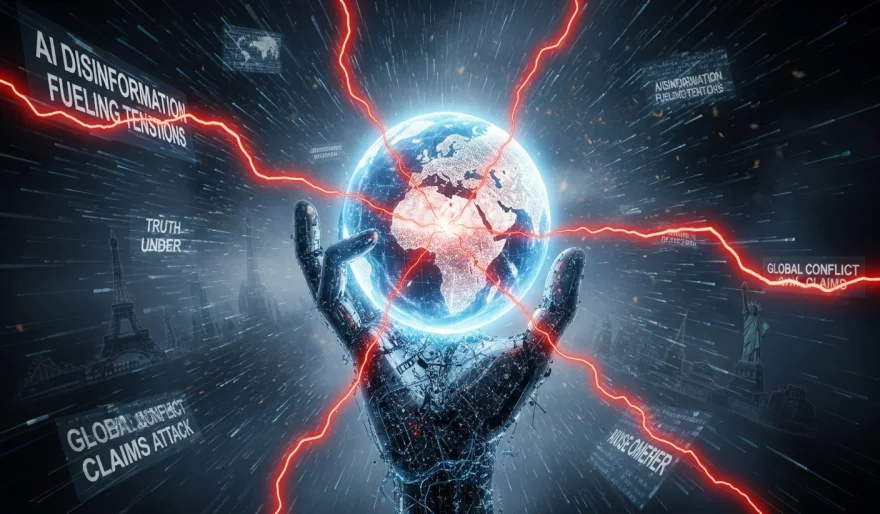
U.S. President Donald Trump has publicly accused Iran of using artificial intelligence as a “disinformation weapon” in the ongoing conflict involving the United States, Israel, and Tehran. Speaking to reporters aboard Air Force One, Trump said Iranian actors were deploying AI to fabricate videos, images and narratives designed to mislead global audiences about their military actions and internal support — including claims of nonexistent attacks and exaggerated public rallies.
Trump also criticized Western media outlets, suggesting — without presenting evidence — that they were amplifying this AI‑generated content or coordinating with Tehran in its dissemination.
In a notable escalation, Federal Communications Commission (FCC) Chair Brendan Carr warned broadcasters that they could risk losing their licenses if they continued what Trump and Carr described as “misleading” or distorted coverage related to the Iran war. Carr emphasized that licensed media must operate “in the public interest,” a stance that many press freedom advocates have sharply criticized as a threat to free expression.
🔎 Parsing the Claims
Trump’s comments reflect broader anxieties over how generative AI tools — which can produce highly realistic videos and images — are increasingly weaponized in information ecosystems, especially during conflicts. Disinformation researchers and independent reporters have documented a surge of AI‑generated content related to the Iran war circulating on platforms like X (formerly Twitter), some of which blends real footage with synthetic elements, making it difficult for audiences to distinguish truth from fabrication.
However, independent verification of specific alleged AI fabrications cited by Trump — such as massive rallies or certain “kamikaze boats” attacking U.S. vessels — is lacking. Reuters noted that some footage corroborates real Iranian attacks on tankers, while other claims of exaggerated scenes have not been independently confirmed.
🧨 Why This Matters
For professionals in AI, media, and information policy, this development sits at the intersection of technology, geopolitics, and governance.
1. AI as a tool of influence — not just innovation
Generative models have empowered malicious actors — including state and non‑state groups — to craft plausibly realistic but fabricated narratives at scale. During active conflict, such content can shift perceptions, sow confusion and amplify political leverage. Scholars and analysts have flagged that AI‑generated war imagery — whether from Iranian sources or other actors — has spread widely, sometimes outpacing fact‑checked reporting.
2. The difficulty of verification in a world of synthetic media
AI makes it easier to create, and harder to detect, convincing fake content. Even experts sometimes struggle to differentiate authentic footage from generative manipulations without forensic tools. This complicates traditional journalism, crisis reporting and even governmental responses, and it underscores the growing need for robust AI content provenance and labeling standards.
3. Legal and political pressure on media sectors
The FCC’s suggestion of revoking broadcast licenses for perceived distortion — an extraordinary position not seen in decades — raises alarm among free speech advocates. It hints at a broader, more contentious debate: Can or should governments exert regulatory pressure on media over AI‑amplified content, and if so, where should the line be drawn between combating misinformation and preserving press freedom?
4. A shifting geopolitical battlefield
Beyond kinetic warfare, digital and informational fronts are emerging as key arenas. Countries and groups are using everything from bot networks to AI tools strategically to influence international opinion, a trend documented long before this specific controversy. Iranian interference in U.S. elections via AI‑aided disinformation campaigns was flagged as early as 2024, highlighting that these dynamics are escalating over time.
💡 The Broader Context for AI Practitioners
This isn’t just political theatre — it’s a live test case of how generative AI shapes public narratives in times of crisis. The incident illustrates:
-
Why AI content authenticity matters more than ever.
Misinformation fueled by generative models can be weaponized quickly — and with global reach. -
Why platforms and regulators are under pressure to act.
The inability to control AI‑generated disinformation strains trust in media and institutions, prompting debates about regulation, liability and platform governance. -
Why geopolitical tensions now have a digital layer.
Information warfare via AI doesn’t require armies or missiles — sometimes just the spread of believable falsehoods can shift public perception and policy.
As AI tools become more accessible and capable, such disputes are likely to become regular flashpoints in geopolitical conflicts, amplifying the urgency for transparent AI governance, strong verification mechanisms, and international norms to counter malign use of synthetic media.

















 AI Agents