Stay Ahead of the Curve
Latest AI news, expert analysis, bold opinions, and key trends — delivered to your inbox.
Trump Threatens States Over AI Rules — Here’s Why It Matters
3 min read Trump threatens to cut federal broadband funding for states whose AI rules slow U.S. tech dominance, pushing for a centralized federal approval system. He frames this as critical to outpacing China, but critics warn hands-off regulation could leave Americans exposed to bias and unsafe AI outputs. December 12, 2025 17:38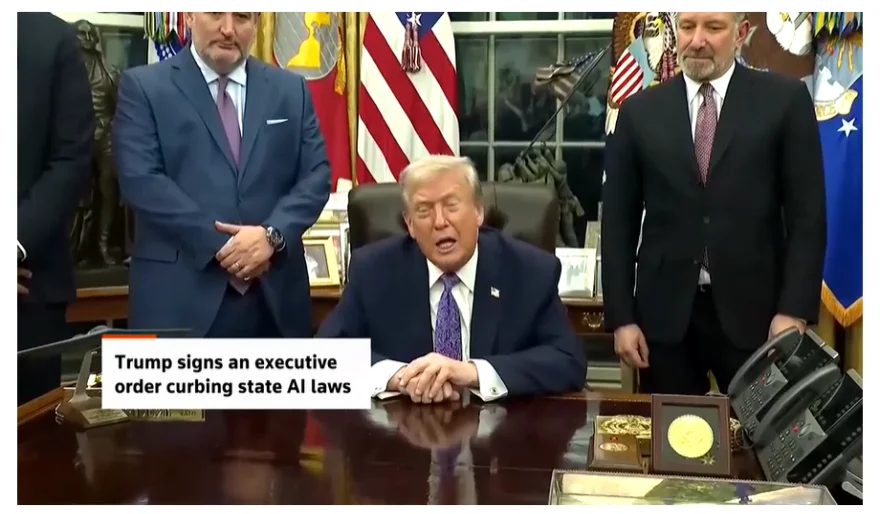
The U.S. AI scene just got a jolt. President Donald Trump announced Thursday that he could cut federal broadband funding for states whose AI regulations are seen as slowing American tech dominance. In his view, having 50 different regulatory regimes is “cumbersome” and slows innovation, especially for startups trying to compete globally.
Why this matters: AI isn’t just another tech trend — it’s a strategic battleground. The U.S. wants to stay ahead of China, and Trump’s move signals a push for centralized federal control, so companies can innovate without getting bogged down by patchwork state rules. That’s a win for speed and scale, but it comes with trade-offs.
The order also takes aim at states trying to police AI for fairness. Places like Colorado have sought to prevent discriminatory outputs in AI models, but the administration says those rules risk “ideological bias” and could produce misleading results. The tension is clear: move fast and risk errors, or regulate and risk slowing down innovation.
The bigger picture: This isn’t just about funding or compliance. It’s about how America shapes the rules of AI globally. If federal control wins out, we could see faster deployment, bigger investments, and a more uniform playing field. But critics warn that hands-off regulation could leave the public vulnerable to bias, unsafe outputs, or unintended consequences.
For investors, policymakers, and tech leaders, this is a signal — the U.S. is doubling down on AI growth, even if it means rewriting the rules on the fly. The next few months will reveal whether this accelerates U.S. AI dominance or sparks new debates over ethics, fairness, and safety.



















 AI Agents