Stay Ahead of the Curve
Latest AI news, expert analysis, bold opinions, and key trends — delivered to your inbox.
White House Presses AI Firms to Cover Data Center Power Costs
4 min read As electricity prices rise amid rapid AI data center expansion, the White House is urging tech companies to cover their own energy needs rather than pass costs to consumers. Major firms including Microsoft, OpenAI, Anthropic, and Google have already announced commitments to absorb electricity costs or invest in dedicated power infrastructure. While details of the proposed policy remain unclear, the move highlights growing tensions between AI infrastructure growth and consumer energy prices. February 26, 2026 15:01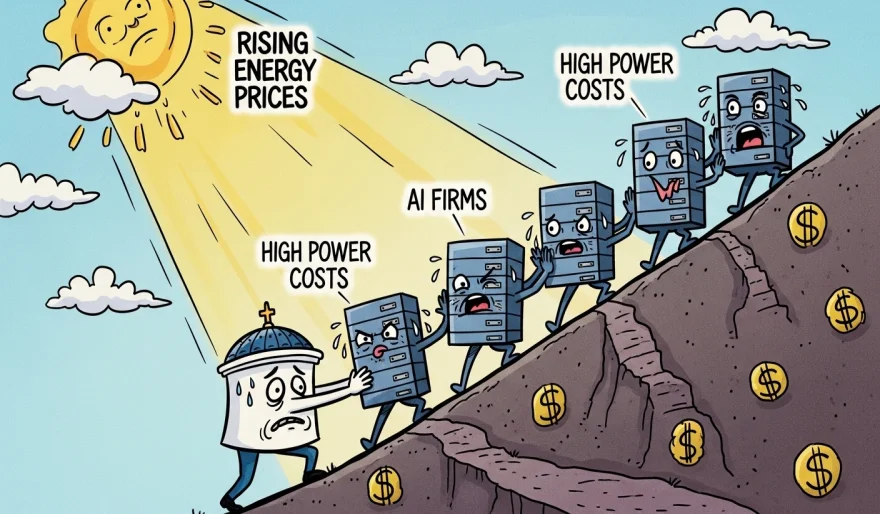
As AI data centers expand rapidly across the U.S., electricity prices are climbing — and the White House wants tech companies to take responsibility.
According to recent data, average national electricity prices have risen more than 6% over the past year, partly driven by the surge in AI-powered data centers connecting to the national grid.
In his State of the Union address, President Donald Trump stated that major tech companies should provide their own power supply — even suggesting they build dedicated power plants to avoid raising consumer rates.
Companies Already Moving
The good news for the administration: many AI leaders have already made similar commitments.
-
Microsoft announced a policy to ensure datacenter electricity costs are not passed to residential customers.
-
OpenAI pledged to “pay its own way on energy.”
-
Anthropic made a similar commitment to cover potential consumer price increases.
-
Google revealed a large-scale battery project in Minnesota to support data center energy demands.
These moves reflect both operational strategy and public relations pressure as communities grow more cautious about infrastructure expansion.
What’s Still Unclear
While commitments have been announced, details remain vague:
-
How responsibility for price increases will be measured
-
How compliance will be enforced
-
Which data centers would be linked to specific grid impacts
The White House has not yet released formal policy text.
Some lawmakers argue informal pledges are insufficient. Arizona Senator Mark Kelly emphasized that Americans need guarantees — not handshake agreements — to ensure energy prices remain stable.
The Bigger Issue
AI’s infrastructure boom is colliding with energy policy.
As models grow larger and data centers expand, power demand increases — turning electricity into a strategic constraint in the AI race.
The debate now centers on one key question:
Should AI companies absorb the energy cost of their growth — or does society share that burden?
The outcome could shape the next phase of AI expansion in the United States.



















 AI Agents