Stay Ahead of the Curve
Latest AI news, expert analysis, bold opinions, and key trends — delivered to your inbox.
Xi Pitches China as Leader of New Global AI Order, Challenging U.S. Dominance
3 min read Chinese President Xi Jinping is positioning China as the architect of a new global AI order, calling for international cooperation and governance that could rival the U.S.-led approach to artificial intelligence. July 17, 2026 12:19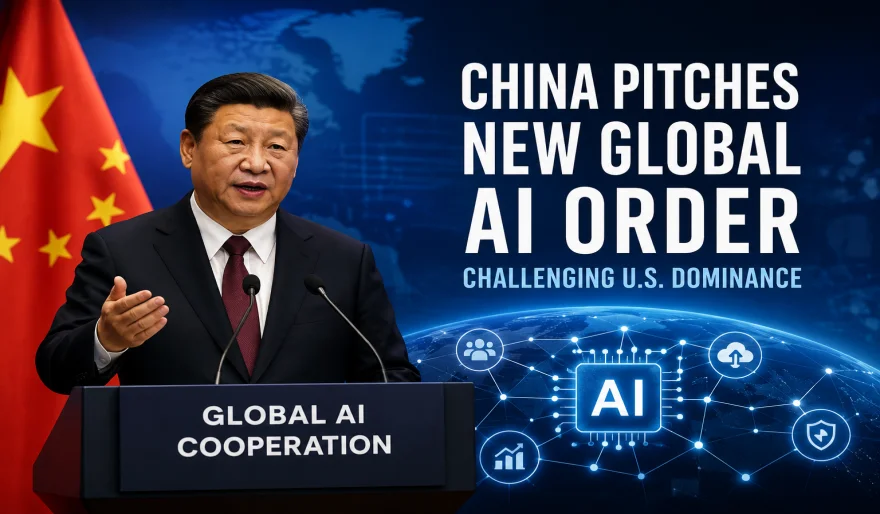
The global AI race is no longer just about building the most powerful models—it's becoming a battle over who gets to write the rules.
Speaking at a major AI conference, Chinese President Xi Jinping urged nations to work together on global AI governance while presenting China as a stable, open alternative to U.S. leadership. Xi argued that AI should remain accessible to all countries and warned against efforts to monopolize critical technologies.
The message comes as Washington continues tightening export restrictions on advanced AI chips and semiconductor technology destined for China. In response, Beijing is accelerating investments in domestic AI infrastructure, open-source models, and international partnerships across Asia, Africa, and Latin America.
Rather than simply competing with the U.S. on technology, China is now trying to shape the global framework for how AI is developed, regulated, and shared. By promoting its own vision of AI governance, Beijing hopes to expand its influence over emerging markets while reducing reliance on Western technology.
Why it matters
AI leadership is increasingly about geopolitical influence, not just technological breakthroughs. The country that shapes global AI standards could gain long-term economic, diplomatic, and strategic advantages.
The upside
China's push for broader international collaboration could give more countries access to AI infrastructure, research, and investment, especially in regions that have been underserved by Western tech companies.
The downside
The growing rivalry between the U.S. and China could split the world into competing AI ecosystems, forcing countries and businesses to navigate different standards, regulations, and technology stacks.
Bottom line: As the AI race enters its next phase, the competition is shifting from who builds the smartest models to who defines the future rules of artificial intelligence.















 AI Agents