Stay Ahead of the Curve
Latest AI news, expert analysis, bold opinions, and key trends — delivered to your inbox.
YouTube Expands AI Deepfake Detection to Protect Politicians, Journalists, and Public Officials
6 min read YouTube is expanding its AI-powered likeness detection system to include politicians, government officials, and journalists, as concerns grow over the use of deepfake technology to spread misinformation. The move gives select public figures new tools to detect and request the removal of unauthorized AI-generated videos that imitate their faces or voices. March 10, 2026 17:16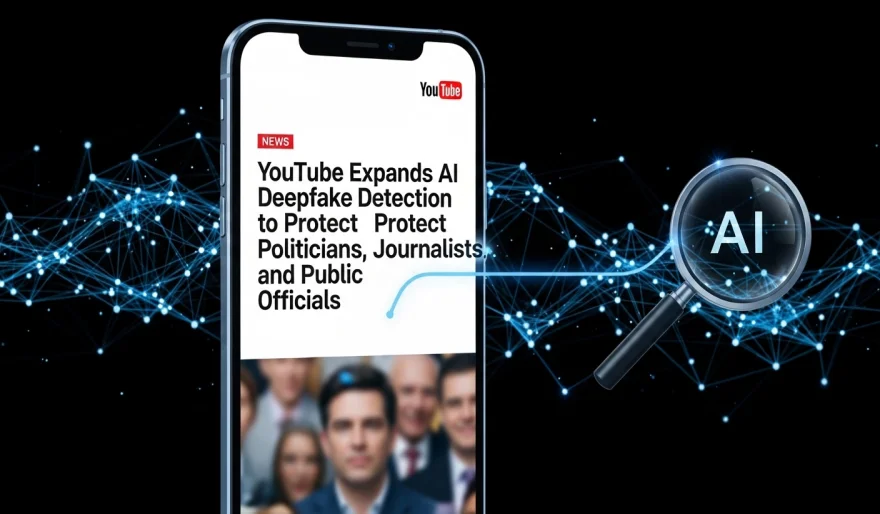
As generative AI tools become more powerful and widely available, the risk of convincing deepfakes circulating online has increased dramatically. In response, YouTube is widening access to its AI likeness detection technology, allowing a pilot group of political leaders, candidates, and journalists to identify and flag AI-generated videos that misuse their identities.
The system scans uploaded content for simulated faces created with AI tools, helping identify videos that digitally replicate real individuals without permission. If a participant in the program believes a video violates platform policies, they can request that it be reviewed and potentially removed.
The initiative is designed to address a growing challenge for online platforms: balancing free expression and creative use of AI while preventing impersonation that could mislead the public.
Building on the Logic of Content ID
The technology works in a way that mirrors YouTube’s long-standing copyright detection system, Content ID. Just as Content ID scans videos to detect copyrighted material, the likeness detection system searches for AI-generated visual replicas of identifiable individuals.
By expanding the tool beyond creators to figures in the civic sphere, YouTube is effectively adapting the platform’s copyright infrastructure to a new problem: identity misuse in the age of generative AI.
This step reflects how major platforms are beginning to treat digital identity as something that needs active protection, especially as AI tools make it easier than ever to clone voices, faces, and gestures.
Why the Civic Space Is Especially Vulnerable
According to YouTube executives, the expansion is focused on the civic ecosystem because the consequences of deepfakes are particularly serious there. AI-generated videos showing politicians or officials saying things they never said could influence public perception, disrupt elections, or damage trust in institutions.
The rise of widely accessible AI video tools has made it possible for almost anyone to generate highly realistic impersonations. When those impersonations involve public figures — especially during political cycles — the risk of misinformation increases significantly.
For journalists, the issue carries an additional dimension. Deepfakes could be used to fabricate statements from reporters or editors, potentially undermining trust in news organizations and the broader information ecosystem.
A Delicate Balance Between Safety and Expression
YouTube says the program is designed with caution in mind. The platform aims to create safeguards against harmful impersonation while still allowing legitimate uses of AI — including satire, parody, or clearly labeled synthetic media.
That balance is increasingly becoming one of the defining policy questions of the AI era. Platforms must determine where creative expression ends and deceptive manipulation begins, particularly when synthetic media can be almost indistinguishable from reality.
By launching the pilot program with a smaller group of public figures, YouTube appears to be testing how such safeguards work in practice before expanding them more widely.
The Broader Fight Against Synthetic Misinformation
The rollout comes at a moment when governments, regulators, and technology companies are all grappling with how to manage the rapid rise of AI-generated media.
Deepfake detection tools, watermarking systems, and content labeling initiatives are emerging as key strategies in this effort. But the challenge remains significant: as detection tools improve, so too do the AI systems designed to evade them.
In that sense, YouTube’s latest move is less about solving the deepfake problem entirely and more about building defensive infrastructure for an internet where synthetic media is becoming the norm.
The Bottom Line
YouTube’s decision to extend its AI likeness detection technology to politicians, journalists, and public officials highlights the growing urgency around deepfake impersonation and digital identity protection.
As generative AI continues to reshape online media, platforms are increasingly forced to rethink how they safeguard public discourse. Tools like likeness detection may not eliminate deepfakes entirely, but they represent an important step toward maintaining trust and accountability in the digital public square.

















 AI Agents