Stay Ahead of the Curve
Latest AI news, expert analysis, bold opinions, and key trends — delivered to your inbox.
YouTube Is Letting Creators Clone Themselves With AI
5 min read YouTube is letting creators make Shorts using AI versions of their own likeness, turning creators into scalable content engines. It boosts posting speed and reach, but raises big questions around trust, deepfakes, and content saturation. AI may be a tool — but authenticity just became the real edge. January 22, 2026 09:41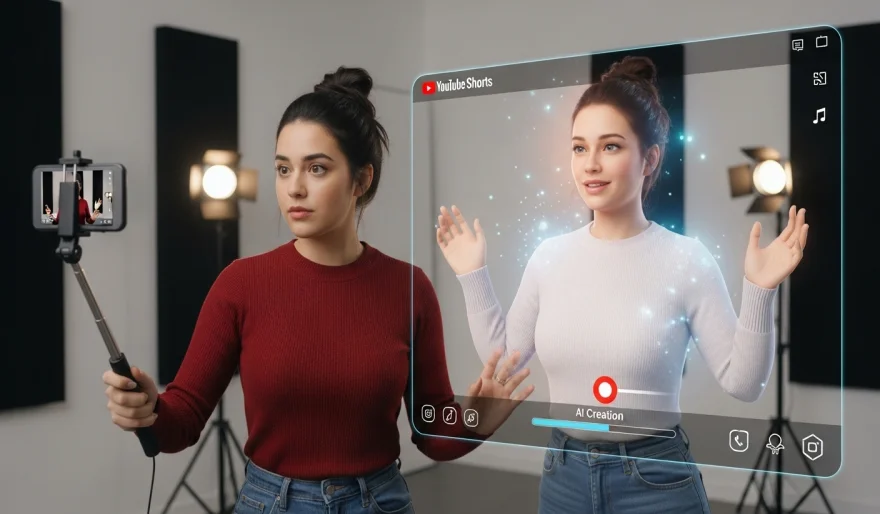
In his annual letter this week, YouTube CEO Neal Mohan announced that creators will soon be able to make Shorts using their own AI likeness — meaning an AI-generated version of you could appear on screen, speak, perform, and publish content even when you’re offline.
“This year you’ll be able to create a Short using your own likeness, produce games with a simple text prompt, and experiment with music,” Mohan wrote, emphasizing that AI is meant to enhance creativity, not replace it.
Still, the shift is hard to ignore.
What This Actually Unlocks
For creators, this isn’t just a fun gimmick — it’s a scale multiplier.
With AI likeness tools, creators could:
-
Post Shorts without filming every time
-
Localize content into multiple languages using the same face and voice
-
Maintain daily posting streaks without burnout
-
Experiment with formats (skits, explainers, reactions) faster than ever
In short: one creator, infinite outputs.
Why YouTube Is Doing This Now
Shorts is YouTube’s biggest growth battleground — competing directly with TikTok and Instagram Reels. The algorithm rewards frequency, speed, and consistency, and AI helps creators hit all three.
By giving creators AI avatars inside YouTube, the platform:
-
Keeps creators from relying on third-party AI tools
-
Locks AI production into the YouTube ecosystem
-
Increases overall content volume (which feeds the algorithm)
More Shorts. More watch time. More ads.
The Upside for the Creator Economy
If done right, this could:
-
Reduce creator burnout
-
Lower the barrier for solo and small creators
-
Help educational and faceless channels add a human presence
-
Turn creators into IP, not just people who show up on camera
Your likeness becomes an asset — not just your time.
The Risks No One Can Ignore
But this also opens a can of worms.
Key concerns:
-
Deepfake misuse and impersonation
-
Audience trust erosion (what’s “real” anymore?)
-
Oversaturation of low-effort AI content
-
Pressure to adopt AI just to stay competitive
YouTube says AI will remain “a tool for expression,” but history shows platforms often optimize for scale first, then deal with quality later.
The Bigger Signal
This move confirms a broader trend: creators are becoming platforms themselves.
AI isn’t replacing creators — it’s turning them into systems that can produce content on demand. The winners won’t be the ones who post the most, but the ones who use AI strategically without losing authenticity.
Because once everyone can clone themselves,
being human again becomes the differentiator.



 AI Agents